It was 6:45 PM on a Tuesday, and I was staring into the abyss of my refrigerator. You know that look. The light flickers, revealing a sad bag of wilting spinach, three eggs, and a can of chickpeas that’s been sitting in the back since last month’s grocery haul. My partner had texted ten minutes prior: “What’s for dinner?” with a single emoji that basically screamed panic. I didn’t have meat. I didn’t have the energy to order takeout (and my wallet definitely didn’t have the budget for it). So, I did what I always do when I’m cornered by hunger and laziness: I raided the pantry.
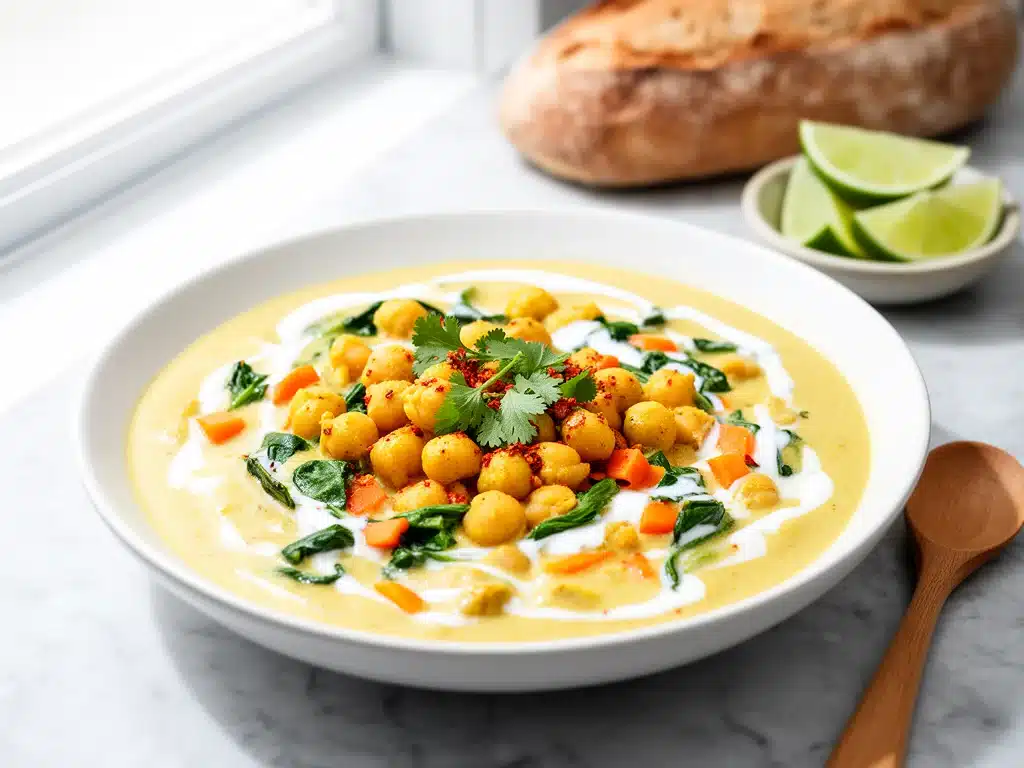
I pulled out that can of chickpeas, a can of coconut milk I’d been hoarding for “someday,” and a handful of frozen spinach. I threw it all into a skillet with some curry powder, garlic, and ginger, and waited for disaster. Instead, I got dinner. A creamy, rich, deeply flavorful curry that tasted like I’d spent three hours simmering it on low heat, when in reality, it took exactly 30 minutes from start to finish. That night, this vegan creamy coconut chickpea curry became a lifesaver. And honestly? It’s stuck around ever since.
I’ve made this curry at least forty times since that Tuesday. It’s my go-to for busy weeknights when I want something that feels indulgent but is actually healthy, cheap, and incredibly fast. It’s the kind of meal that fills the house with the best possible smell—warm spices, caramelizing onions, and rich coconut—while you’re still figuring out what to wear to bed. It’s comforting without being heavy, and it’s vegan without tasting like cardboard. If you’re tired of the same old weeknight rotation, this is the recipe you need to know.
Why You’ll Love This Recipe
There are a lot of reasons I keep coming back to this vegan creamy coconut chickpea curry, but they all boil down to one thing: it just works. It’s reliable. It’s forgiving. And it tastes like a reward at the end of a long day. Here’s why this has earned a permanent spot in my weekly menu:
- Stupid Simple — Seriously, if you can open a can and stir a spoon, you can make this. There’s no complex technique here. Just chop, sauté, simmer, and eat. I’ve made this while helping my kids with homework and while talking on the phone. It’s that low-maintenance.
- Lightning Fast — 30 minutes from start to finish. And only 10 of those minutes are active chopping and stirring. The rest is just waiting for the sauce to thicken. I make this on nights when I get home exhausted and just want to sit down.
- Pantry-Friendly — You probably have 70% of these ingredients already. Chickpeas, coconut milk, curry powder, onions, garlic. These are staples. I keep them stocked specifically so I can throw this together on a whim.
- Crowd-Pleaser — I’ve served this to my meat-eating friends, my picky eaters, and my vegan sister. Everyone loves it. The creamy coconut sauce masks any “health food” vibes and makes it taste like comfort food.
- Makes Amazing Leftovers — Actually tastes better the next day. The flavors meld together overnight, and it reheats beautifully. I deliberately make a double batch because I know I’ll want it for lunch on Thursday.
- Budget-Smart — Feeds 4-6 people for under $15. Chickpeas and coconut milk are cheap. Vegetables vary, but even if you buy fresh, it’s less than a single pizza delivery. It’s dinner that doesn’t break the bank.
This is my answer to “what’s for dinner” when I don’t want to stress. No weird ingredients, no complicated steps, just reliable, delicious food that makes everyone happy.
Ingredients You’ll Need
Here’s the best part: this vegan creamy coconut chickpea curry doesn’t require a trip to a specialty store. You likely have most of this already. I’m particular about a few things here, but mostly, it’s about using good basics to build big flavor.
For the Base
Coconut oil (2 tablespoons / 30ml) — I use this for sautéing because it adds a subtle sweetness. You can use olive oil or avocado oil, but coconut oil really enhances the coconut flavor in the sauce.
Yellow onion (1 medium, diced / about 200g) — Sweet onions work too, but yellow gives better depth. White onions are too sharp for this. Dice them small so they melt into the sauce.
Garlic (4 cloves, minced / about 2 tablespoons) — Fresh only. No jarred garlic in this recipe. It tastes metallic and kills the vibe. Minced is fine, but grated is even better if you have a microplane.
Fresh ginger (1 tablespoon, grated / about 10g) — This is non-negotiable. It adds that bright, zesty kick that makes curry taste like curry. Grate it fresh; powdered ginger is too dusty for this.
For the Flavor
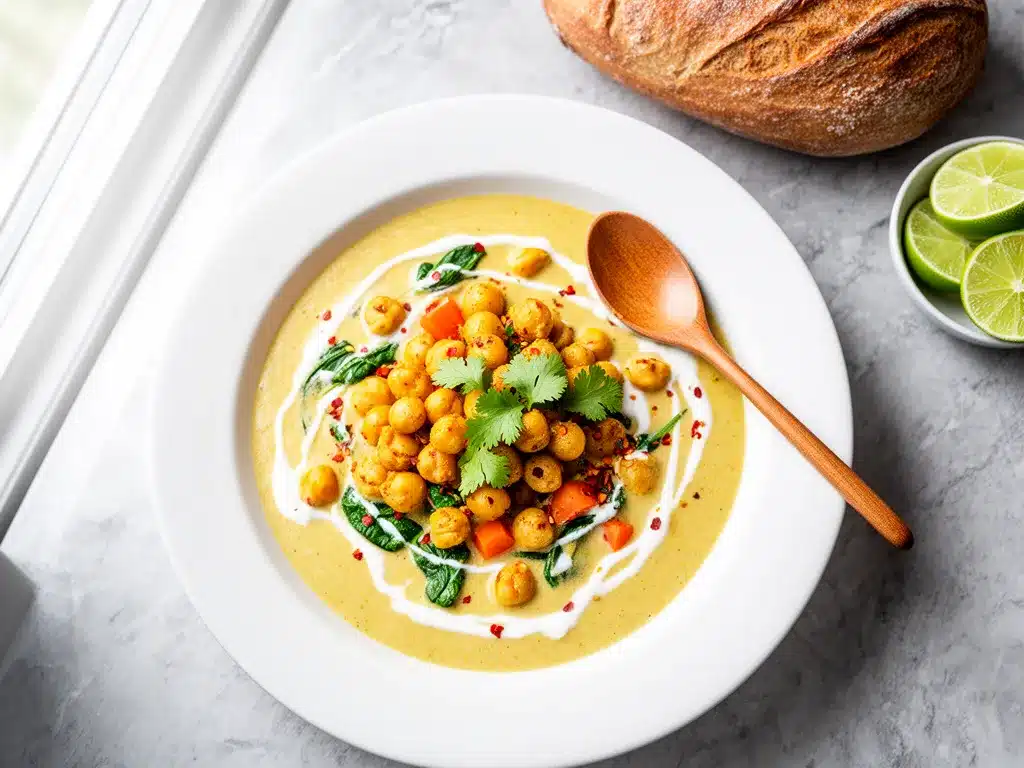
Curry powder (2 tablespoons) — Use a good quality blend. I like Madras curry powder for a bit of heat, but mild works too if you’re sensitive. Don’t use curry paste unless you want a different texture.
Ground cumin (1 teaspoon) — Adds earthiness. It’s subtle but necessary for depth.
Ground turmeric (1 teaspoon) — Gives it that gorgeous golden color and anti-inflammatory benefits. It’s mild, so don’t be afraid to use it.
Coconut milk (1 can / 400ml) — Full-fat is key here. Light coconut milk makes the sauce thin and watery. You want that rich, creamy texture. Shake the can before opening!
Vegetable broth (½ cup / 120ml) — I use low-sodium so I can control the salt. Adds volume without making it too salty.
For the Body
Chickpeas (2 cans / 400g each, drained and rinsed) — The protein powerhouse. Rinse them well to remove the slimy aquafaba liquid. Pat them dry if you want them slightly crispy when sautéing, but it’s not required.
Spinach (3 cups / 90g fresh) — Or kale, or chard. Spinach wilts instantly and adds nutrients without changing the flavor much. It’s the easiest way to add greens.
Lime juice (1 tablespoon) — Acid cuts through the richness of the coconut. Fresh squeezed is best. Bottled is okay in a pinch.
Salt and black pepper — To taste. You’ll need more salt than you think because chickpeas and coconut milk are bland on their own.
Optional Add-ins
Red bell pepper (1, diced) — Adds crunch and sweetness. I throw this in with the onions.
Coconut milk cream (2 tablespoons) — For extra richness if you want it ultra-luxurious.
Fresh cilantro (½ cup, chopped) — For garnish. It adds freshness. If you hate cilantro, skip it or use parsley.
Equipment Needed
You don’t need fancy equipment for this. Here’s what I actually use:
Large skillet or Dutch oven — I use a 12-inch cast iron skillet. It needs to be big enough to hold all the ingredients without crowding. A Dutch oven works too if you want to simmer it longer.
Wooden spoon — For stirring. Silicone works too. Don’t use metal if you’re using non-stick.
Can opener — Seriously. Don’t forget this.
Microplane or grater — For the ginger and garlic. It makes them finer and distributes flavor better.
Colander — For rinsing the chickpeas.
Measuring cups and spoons — Standard stuff. Dollar store versions work fine.
Ladle — For serving over rice or naan.
How to Make It: Step-by-Step
Alright, let’s make this! I’m walking you through exactly how I do it, including the little tricks I’ve picked up over dozens of batches.
Step 1: Prep Your Ingredients (5-8 minutes)
Before you start cooking, chop your onion, mince your garlic, and grate your ginger. I know it seems fussy, but it makes the actual cooking way less stressful. Once you start cooking, things move fast. Drain and rinse the chickpeas. Pat them dry with a paper towel if you want them slightly crispy, but it’s not a dealbreaker.
Step 2: Sauté the Aromatics (5 minutes)
Heat the coconut oil in your large skillet over medium heat. Add the diced onion and cook for 3-4 minutes until it starts to soften and turn translucent. Add the garlic and ginger. Cook for 1 minute, stirring constantly. The garlic should smell amazing but not brown—browned garlic tastes bitter. This is where the flavor base starts.
Step 3: Bloom the Spices (2 minutes)
Add the curry powder, cumin, and turmeric to the pan. Stir constantly for 1-2 minutes. This step is crucial. Toasting the spices in the oil “blooms” them, releasing their essential oils and making the flavor way more intense. If you skip this, the curry will taste flat.
Step 4: Build the Sauce (5 minutes)
Pour in the coconut milk and vegetable broth. Stir well to combine with the spice paste. Let it simmer gently for 3-4 minutes. The sauce should thicken slightly and smell incredible. If it looks too thick, add a splash more broth. If it’s too thin, let it simmer a bit longer.
Step 5: Add the Chickpeas (5 minutes)
Add the drained chickpeas to the sauce. Stir to coat them evenly. Let them simmer for 5 minutes so they absorb the flavors. The chickpeas will soften slightly and the sauce will cling to them. If you want a thicker sauce, you can mash a few of the chickpeas against the side of the pan with your spoon.
Step 6: Add the Greens (2 minutes)
Stir in the fresh spinach. It will wilt down quickly, in about 1-2 minutes. Once it’s just barely wilted, remove the pan from the heat. This preserves the bright green color and nutrients.
Step 7: Finish and Serve
Stir in the lime juice and taste. Add salt and pepper as needed. The lime juice is the final touch that makes all the flavors pop. Serve immediately over basmati rice or with warm naan bread. Top with fresh cilantro if you’re feeling fancy.
Total Time: About 30 minutes (10 minutes active, 20 minutes mostly hands-off)
Expert Tips & Tricks
Here’s everything I’ve learned from making this dozens of times. These tips will save you from my mistakes.
Bloom Your Spices
This is the #1 tip. Toasting the curry powder in oil for 1-2 minutes before adding liquid makes a huge difference. Raw spice powder tastes dusty. Bloomed spice tastes rich and aromatic. I learned this the hard way with a bland curry that I had to dump.
Don’t Skimp on Salt
Chickpeas and coconut milk are bland. You need enough salt to bring out the sweetness of the coconut and the warmth of the spices. Taste before serving and adjust. It’s better to under-salt initially and add more at the end.
Use Full-Fat Coconut Milk
Light coconut milk is mostly water. It won’t give you that creamy, luxurious texture. Full-fat is non-negotiable for this vegan creamy coconut chickpea curry. If you’re worried about calories, just eat a reasonable portion.
Add Acid at the End
Lime juice added at the beginning loses its brightness. Add it right before serving. It cuts through the fat and makes the flavors sing. I’ve tasted curries with and without this step, and the difference is night and day.
Mash Some Chickpeas
If you want a thicker, creamier sauce without adding more coconut milk, mash a handful of chickpeas against the side of the pan. The starches release and thicken the sauce naturally.
Common Mistakes (and how to avoid them)
- Mistake: Sauce is too thin — Fix: Let it simmer longer or mash some chickpeas. Also, make sure you’re using full-fat coconut milk.
- Mistake: Spices taste raw — Fix: You didn’t bloom them enough. Cook the spices in oil for a full 2 minutes before adding liquid.
- Mistake: Curry is too bland — Fix: Add more salt and a squeeze of lime. It’s usually just a lack of seasoning and acid.
Variations & Substitutions
Once you’ve nailed the basic version, here’s how you can mix it up. I’ve tried all of these.
Protein Swap
Use lentils instead of chickpeas. Red lentils cook faster and break down into the sauce, making it thicker. Brown or green lentils take longer to cook, so add them earlier.
Veggie-Loaded
Add diced sweet potatoes, cauliflower florets, or kale. Sweet potatoes need about 15 minutes to cook, so add them with the chickpeas. Cauliflower cooks in 10 minutes. This is how I get my kids to eat vegetables.
Spicy Version
Add a teaspoon of cayenne pepper or a diced jalapeño with the onions. Or use a hot curry powder. If you like heat, this version is for you.
Lighter Version
Use light coconut milk and reduce the oil. It’s thinner but still good. I make this when I’m trying to be “healthy.” It’s not as rich, but it’s lighter.
Dietary Modifications
- Gluten-Free — Everything here is naturally gluten-free. Just check your curry powder label to be sure.
- Dairy-Free — This recipe is already dairy-free. Perfect for vegans and those with lactose intolerance.
- Low-Sodium — Use low-sodium broth and rinse chickpeas well. Add salt to taste at the end.
Serving & Storage
How to Serve:
I usually serve this straight from the skillet at the dinner table—it looks rustic and stays warm. But here are other ways I’ve enjoyed it:
Side Dishes:
- Basmati rice (obviously)
- Warm naan or roti
- Cucumber raita (if you eat dairy)
- Simple green salad with lemon dressing
Toppings Bar:
When I have guests, I put out: extra cilantro, lime wedges, red pepper flakes, crispy fried onions. Everyone customizes their bowl.
Storage Instructions:
Refrigerator:
Store in an airtight container for up to 4 days. The sauce will thicken in the fridge—totally normal.
Reheating:
Best method: Add to a skillet with a splash of water or broth over low heat. Stir until heated through and creamy again. The sauce will loosen up. Microwave method: Heat in 30-second intervals, stirring between. Add a splash of water if it’s too thick.
Freezing:
Yes, this freezes well! Store in a freezer-safe container for up to 3 months. Thaw in the fridge overnight and reheat gently. The texture might be slightly softer, but it’s still delicious.
Meal Prep:
This is perfect for meal prep. Make a big batch on Sunday, portion it into containers, and you have lunch for the week. It reheats beautifully and tastes even better on day two.
Nutrition Information
I’m not a nutritionist, but here’s the breakdown if you’re tracking.
Per Serving (based on 6 servings):
- Calories: 380
- Protein: 12g
- Carbs: 45g
- Fiber: 10g
- Sugar: 8g
- Fat: 18g
- Saturated Fat: 14g
- Cholesterol: 0mg
- Sodium: 450mg
What’s Good:
- High in fiber from chickpeas and vegetables
- Good source of plant-based protein
- Rich in healthy fats from coconut milk
- Antioxidants from turmeric and spices
What to Know:
- Higher in calories from coconut milk
- Naturally gluten-free and dairy-free
- Can be high in sodium if you don’t use low-sodium broth
Look, this is comfort food with coconut milk. It’s not a diet recipe. But it’s way better than takeout, costs less, and I know exactly what’s in it. When I want to make it lighter, I use more veggies and less rice. But usually? I just eat a reasonable portion and enjoy it.
Final Thoughts
So that’s my go-to vegan creamy coconut chickpea curry! I’ve probably talked your ear off at this point, but when you make a recipe this often, you have a lot to say about it.
This has saved weeknight dinners more times than I can count. It’s my answer to “what’s for dinner” when I’m tired, don’t want takeout, and still want something that tastes really good. My family is happy, my friends are happy, and I’m happy because I’m not stressed about cooking.
Make it yours! Try different add-ins, swap in your favorite vegetables, adjust the spice level. The best recipes are the ones you adapt to your family’s tastes. If you make this, drop a comment and let me know what you think! I love hearing how recipes turn out in your kitchen. And if something doesn’t work, tell me that too—I’m here to help troubleshoot.
Happy cooking! And I hope your kitchen smells half as good as mine does right now.
Frequently Asked Questions
Can I use light coconut milk instead of full-fat?
You can, but the sauce will be much thinner and less rich. If you want to try it, use light coconut milk and add a tablespoon of cornstarch to thicken it. Whisk the cornstarch into the milk before adding to the pan. I’ve done this when I ran out of full-fat—it works okay, just not as good as the real thing. Full-fat is the key to that creamy texture.
My sauce came out watery—what happened?
Usually means you didn’t let it simmer long enough to thicken, or you used light coconut milk. Let the coconut milk simmer for a full 5 minutes before adding chickpeas. If it’s already watery, turn up the heat and let it reduce for another few minutes. Mashing some chickpeas will also help thicken it.
Can I make this ahead for a dinner party?
Absolutely. Make the curry up to 2 days ahead and store in the fridge. Reheat gently on the stove, adding a splash of water or broth to loosen it up. It actually tastes better after the flavors have had time to meld. I do this all the time for parties.
Why did my curry taste bland?
Chickpeas and coconut milk are very mild. You need enough salt and acid to balance them. Taste and add salt gradually. Also, make sure you’re blooming your spices in oil first. Raw spices taste dusty. A squeeze of lime juice at the end also brightens everything up.
Can I freeze this?
Yes! This freezes very well. Store in an airtight container for up to 3 months. Thaw in the fridge overnight and reheat gently. The texture might be slightly softer, but it’s still delicious. I freeze it in portions for quick lunches.
Can I use canned chickpeas or do I need dried?
Canned is perfect. Just drain and rinse them well. Dried chickpeas take hours to cook, which defeats the purpose of a 30-minute meal. If you do use dried, soak them overnight and cook until tender before adding to the sauce.
What’s the best way to reheat leftovers?
Add a splash of water or broth to a skillet, add your leftover curry, and heat gently over low heat, stirring frequently. The extra liquid brings back the creamy texture. Microwave sort of works but tends to dry it out. If you do microwave, definitely add a splash of water first and heat in short bursts, stirring between.
For more easy weeknight dinners, check out my cheesy broccoli and chicken fritters for a kid-friendly option, or my 10-minute strawberry roll-ups for a quick breakfast. If you’re hosting a gathering, don’t miss my easy ranch pasta salad as a perfect side dish.
Pin This Recipe!
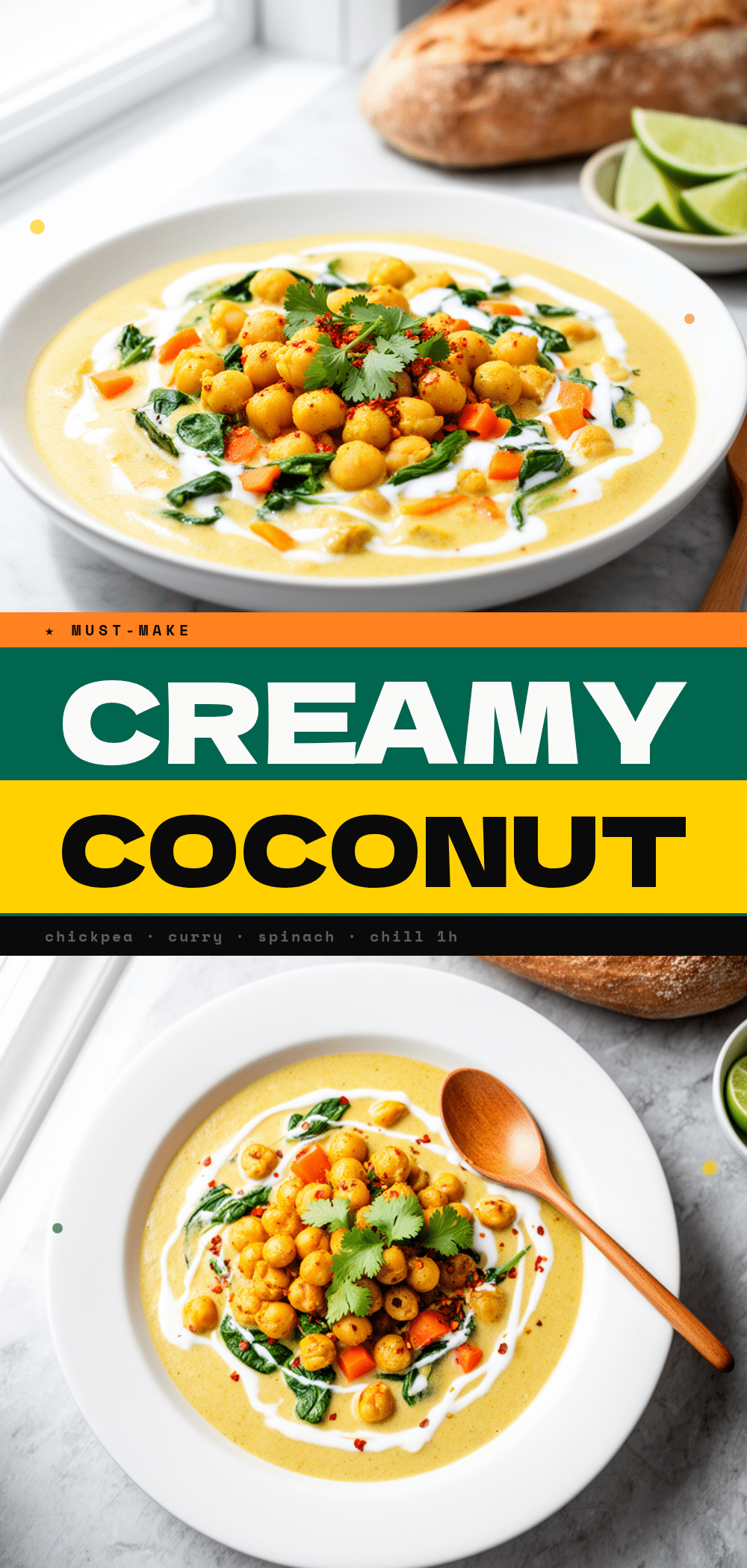
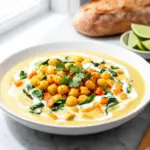
Vegan Creamy Coconut Chickpea Curry
- Total Time: 30 minutes
- Yield: 4-6 servings 1x
Description
A quick, 30-minute vegan curry made with chickpeas, coconut milk, and warm spices. It’s creamy, flavorful, and perfect for busy weeknights.
Ingredients
- 2 tablespoons coconut oil
- 1 medium yellow onion, diced
- 4 cloves garlic, minced
- 1 tablespoon fresh ginger, grated
- 2 tablespoons curry powder
- 1 teaspoon ground cumin
- 1 teaspoon ground turmeric
- 1 can (400ml) full-fat coconut milk
- 1/2 cup vegetable broth (low-sodium)
- 2 cans (400g each) chickpeas, drained and rinsed
- 3 cups fresh spinach
- 1 tablespoon lime juice
- Salt and black pepper to taste
- Optional: 1 red bell pepper, diced
- Optional: 2 tablespoons coconut milk cream
- Optional: 1/2 cup fresh cilantro, chopped
Instructions
- Prep ingredients: Dice onion, mince garlic, grate ginger, and drain/rinse chickpeas.
- Heat coconut oil in a large skillet over medium heat. Add diced onion and cook for 3-4 minutes until softened.
- Add garlic and ginger; cook for 1 minute until fragrant but not browned.
- Add curry powder, cumin, and turmeric. Stir constantly for 1-2 minutes to bloom the spices.
- Pour in coconut milk and vegetable broth. Stir to combine and simmer for 3-4 minutes until the sauce thickens slightly.
- Add chickpeas to the sauce. Simmer for 5 minutes to allow flavors to meld. Optionally mash a few chickpeas for thickness.
- Stir in fresh spinach and cook for 1-2 minutes until wilted. Remove from heat.
- Stir in lime juice. Season with salt and pepper to taste.
- Serve immediately over basmati rice or with warm naan bread, topped with cilantro if desired.
Notes
Bloom spices in oil for better flavor. Use full-fat coconut milk for creaminess. Add acid (lime juice) at the end to preserve brightness. Can be frozen for up to 3 months.
- Prep Time: 10 minutes
- Cook Time: 20 minutes
- Category: Main Course
- Cuisine: Indian
Nutrition
- Serving Size: 1 bowl with rice or
- Calories: 380
- Sugar: 8
- Sodium: 450
- Fat: 18
- Saturated Fat: 14
- Carbohydrates: 45
- Fiber: 10
- Protein: 12
Keywords: vegan, curry, chickpea, coconut milk, quick dinner, weeknight meal, gluten-free, dairy-free, healthy, budget-friendly