It was a Tuesday in November—gray, windy, the kind of night where the house feels too quiet and you’re already dreading the “what’s for dinner?” conversation. I had a head cold, zero motivation, and a fridge that was mostly empty except for a bag of frozen chickpeas, some sad-looking spinach, and a jar of tahini that had been sitting there since last summer. I didn’t want to order takeout. I didn’t want to cook anything heavy. I just wanted something that felt fresh, vibrant, and somehow magical without requiring me to stand over a hot stove for an hour.
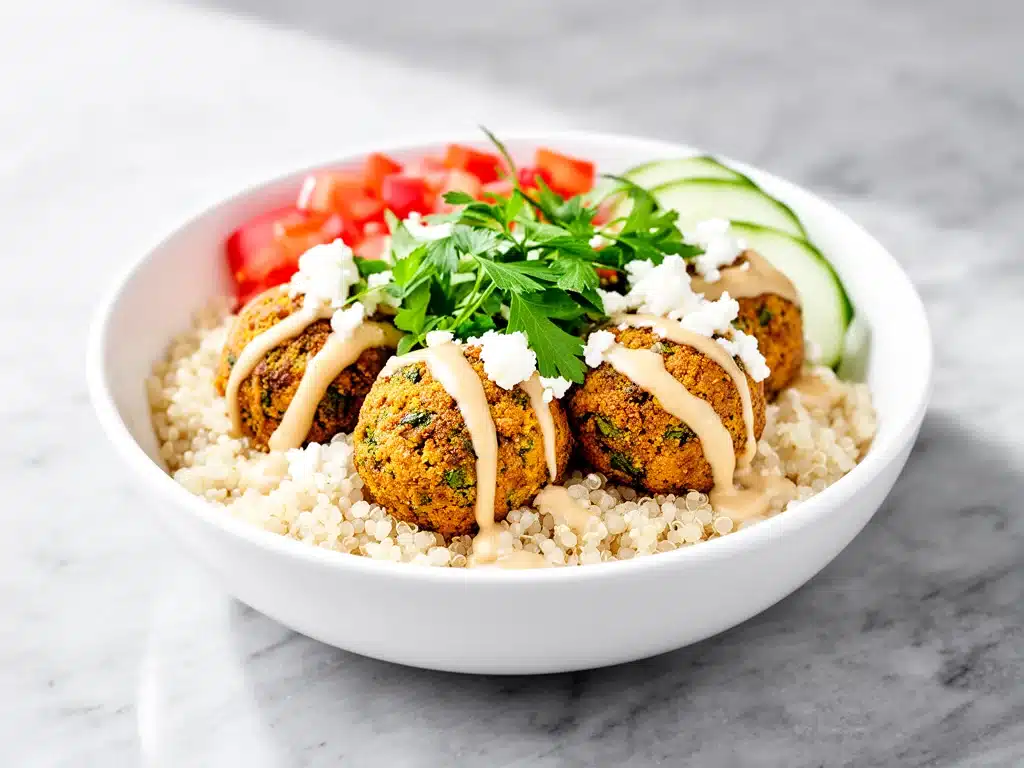
So I threw these together. I called it a “Mediterranean Baked Falafel Bowl” because it sounded fancy enough to make me feel like I was on a beach in Santorini rather than in my pajamas with a tissue box nearby. I baked the falafel instead of frying them (because who has the energy for oil splatter when you’re sick?), whipped up a quick tahini sauce, and loaded a bowl with whatever greens I could find. The result? I forgot I was sick. I forgot the gray weather. I just ate. And it was good. Really good.
That night changed how I think about weeknight dinners. I’ve made this Mediterranean baked falafel bowl recipe at least fifteen times since then. Some weeks it’s my go-to when I’m exhausted. Other times, it’s my answer to “I want healthy food but I don’t want to feel like I’m eating rabbit food.” It’s become a staple in my kitchen because it’s fast, it’s colorful, and it tastes like I spent more time than I actually did. If you’re looking for a healthy dinner that doesn’t require a trip to the store or a culinary degree, this is it.
Why You’ll Love This Recipe
There are about ten reasons I keep making this, but here are the big ones that keep me coming back to the kitchen every week.
Baked, Not Fried — Seriously, this is the game-changer. Most falafel recipes call for deep frying, which is amazing for flavor but terrible for a Tuesday night when you’re trying to be healthy. Baking gives you that crispy exterior and tender interior without the guilt or the mess. I use a bit of olive oil spray, and you honestly can’t tell the difference. It’s lighter, cleaner, and way easier to clean up.
Five Ingredients (Plus Pantry Staples) — I’m not exaggerating. The core of this recipe relies on chickpeas, tahini, lemon, garlic, and fresh herbs. If you have those, you’re golden. I’m particular about using fresh parsley and cilantro—dried just doesn’t cut it here—but beyond that, it’s super accessible. It’s budget-friendly, too. Chickpeas are cheap, and tahini lasts forever.
Meal Prep Friendly — This is where this recipe shines. I make a big batch of falafel on Sunday, roast some veggies, and whip up the tahini sauce. By Wednesday, I’m assembling bowls in under five minutes. It tastes just as good cold or room temperature as it does hot, which makes it perfect for lunch leftovers. I’ve even packed these for work lunches, and my coworkers are jealous.
Customizable — Have a picky eater? Skip the cilantro. Want more protein? Add some grilled chicken or tofu. Feeling fancy? Add roasted sweet potatoes. This bowl is a canvas. I’ve served this to my vegetarian sister, my meat-loving brother, and my gluten-free neighbor, and everyone finds something to love. It’s the ultimate crowd-pleaser.
This is my go-to when I need dinner to just work. No complicated techniques, no weird ingredients, just reliable, delicious food that makes everyone happy. It’s healthy, it’s satisfying, and it’s fast. Let’s get into the details.
Ingredients You’ll Need
Here’s the best part: you probably have most of this already. This isn’t a recipe that requires a special trip to three different stores. I’m particular about three ingredients here, and I’ll tell you exactly why.
For the Falafel
Canned chickpeas (2 cans, 15oz each / about 850g drained weight) — This is the base. Do not use fresh or cooked-from-dry chickpeas unless you want to boil them for hours. Canned is fine, but here’s the trick: drain them well and pat them dry with paper towels. Excess moisture is the enemy of crispy baked falafel. I press them between towels for 10 minutes. It’s worth it.
Fresh parsley (1 cup, packed / about 30g) — This gives that bright, green flavor. Don’t skip it. I use flat-leaf parsley because it’s milder. If you only have curly parsley, chop it finer. Fresh is non-negotiable here; dried parsley tastes like dust.
Fresh cilantro (½ cup, packed / about 15g) — Adds a citrusy note. If you hate cilantro (the “soap gene” is real), swap it for mint or basil. I personally love the combination, but taste your mix before baking.
Garlic (4 cloves, minced / about 2 tablespoons) — Yes, four cloves. Don’t skimp. Garlic is the backbone of falafel flavor. Fresh only—no jarred garlic in this recipe. It has a metallic aftertaste that clashes with the tahini.
Tahini (2 tablespoons / 30ml) — This goes in the falafel mix too, not just the sauce. It adds richness and helps bind the mixture. Use a well-stirred tahini from the jar. If it’s separated, stir it until smooth.
Cumin (1 teaspoon) — Warm and earthy. Essential. I use ground cumin, but if you have whole seeds, toast them lightly before grinding.
Smoked paprika (½ teaspoon) — This adds a subtle smokiness that mimics frying. It’s a secret weapon. If you don’t have smoked paprika, regular paprika works, but the flavor is flatter.
Baking powder (1 teaspoon) — This is the magic leavener. It helps the falafel puff up in the oven. Don’t skip it, and make sure it’s fresh. Old baking powder makes dense falafel.
Salt and black pepper — To taste. I use about 1 teaspoon of salt and ½ teaspoon of pepper.
For the Tahini Sauce
Tahini (¼ cup / 60ml) — The star of the sauce. Stir it well before measuring.
Lemon juice (3 tablespoons / 45ml) — Freshly squeezed. Bottled lemon juice tastes flat and bitter. Squeeze your own lemons. It takes 30 seconds and makes a huge difference.
Garlic (1 clove, minced) — Just a little bit for background flavor.
Warm water (2-4 tablespoons) — To thin the sauce. Add gradually until you reach your desired consistency.
Salt (½ teaspoon) — To balance the richness.
For the Bowl Assembly
Quinoa or couscous (1 cup cooked / about 185g) — I use quinoa for extra protein, but couscous is faster. Both work great. Cook them according to package directions.
Cherry tomatoes (1 cup, halved) — Adds brightness and acidity. I use them raw because they’re sweet and juicy.
Cucumber (1 medium, diced) — Cool and crisp. English cucumbers are best because they’re less watery.
Red onion (¼ cup, thinly sliced) — Adds a sharp bite. Soak in cold water for 10 minutes to mellow the flavor if you’re sensitive to raw onion.
Feta cheese (½ cup, crumbled / about 70g) — Salty and tangy. I use a block and crumble it myself. Pre-crumbled has anti-caking agents that make it dry.
Mixed greens (2 cups) — I use a blend of arugula and spinach. Arugula adds a peppery bite that cuts through the richness of the tahini.
Olives (¼ cup, Kalamata or black) — Optional but recommended. Adds a briny punch.
Olive oil — For drizzling.
Pomegranate seeds (¼ cup) — Optional, but they add a beautiful pop of color and sweetness. I buy them pre-packaged when I’m feeling fancy.
Equipment Needed
You don’t need fancy equipment for this. Here’s what I actually use.
Food processor — Essential for the falafel mix. You want a fine, paste-like consistency. If you don’t have one, you can use a mortar and pestle, but it will take forever. I use my Cuisinart—it’s been through the wringer and still works perfectly.
Baking sheets — Two standard 18×13 inch sheets. Line them with parchment paper. I love parchment because cleanup is instant. Silicone mats work too, but parchment is easier for sticky mixtures.
Parchment paper — Non-negotiable. Falafel sticks to everything if you don’t use it.
Mixing bowls — One medium bowl for the falafel mix, one small for the sauce.
Measuring cups and spoons — Standard stuff. Dollar store versions work fine.
Spatula — For stirring the sauce and scraping the bowl.
Knife and cutting board — For chopping veggies. Sharp knife, please. Dull knives make you cry more—learned this the hard way.
Colander — For draining the chickpeas. Or just use the lid to drain—I do this when I’m lazy.
How to Make It: Step-by-Step
Alright, let’s make this! I’m walking you through exactly how I do it, including the little tricks I’ve picked up.
Step 1: Prep the Chickpeas (10 minutes)
Drain the canned chickpeas into a colander and rinse them well. Then, the most important step: pat them completely dry. Use paper towels or a clean kitchen towel. Press down gently to remove as much moisture as possible. This step is crucial for crispy falafel. Wet chickpeas = soggy falafel. I’ve made this mistake before, and it was a disaster. Dry chickpeas take 10 minutes but save you from disappointment.
Step 2: Make the Falafel Mix (5 minutes)
Place the dried chickpeas, parsley, cilantro, garlic, tahini, cumin, smoked paprika, baking powder, salt, and pepper in a food processor. Pulse until everything is finely chopped. Then, process continuously until the mixture forms a thick, sticky paste. It should look like wet sand. If it’s too dry, add a teaspoon of water. If it’s too wet, add a tablespoon of breadcrumbs. Taste a small amount (raw chickpeas are safe) and adjust seasoning. You want it well-seasoned, as the baking will mellow the flavors slightly.
Step 3: Form the Falafel (10 minutes)
Preheat your oven to 400°F (200°C). Line two baking sheets with parchment paper. Scoop out tablespoon-sized portions of the mixture. Roll them into balls, then gently flatten them into patties. They don’t need to be perfect—rustic is good. Place them on the baking sheets, leaving about an inch between each. Spray the tops lightly with olive oil. This helps them brown in the oven.
Step 4: Bake the Falafel (20-25 minutes)
Place the baking sheets in the oven. Bake for 20-25 minutes, flipping halfway through. You want them golden brown and crispy on the outside. The internal temperature should reach 165°F (74°C). If they’re not brown enough, broil for 1-2 minutes at the end, but watch them closely—they burn fast. Let them cool for 5 minutes before handling. They firm up as they cool.
Step 5: Make the Tahini Sauce (5 minutes)
While the falafel bakes, make the sauce. In a small bowl, whisk together the tahini and lemon juice. It will seize up and look thick—this is normal. Gradually whisk in warm water, one tablespoon at a time, until you reach a pourable consistency. Stir in the minced garlic and salt. Taste and adjust. You want it tangy, creamy, and slightly salty. If it’s too thick, add more water. If it’s too thin, add more tahini.
Step 6: Assemble the Bowls (5 minutes)
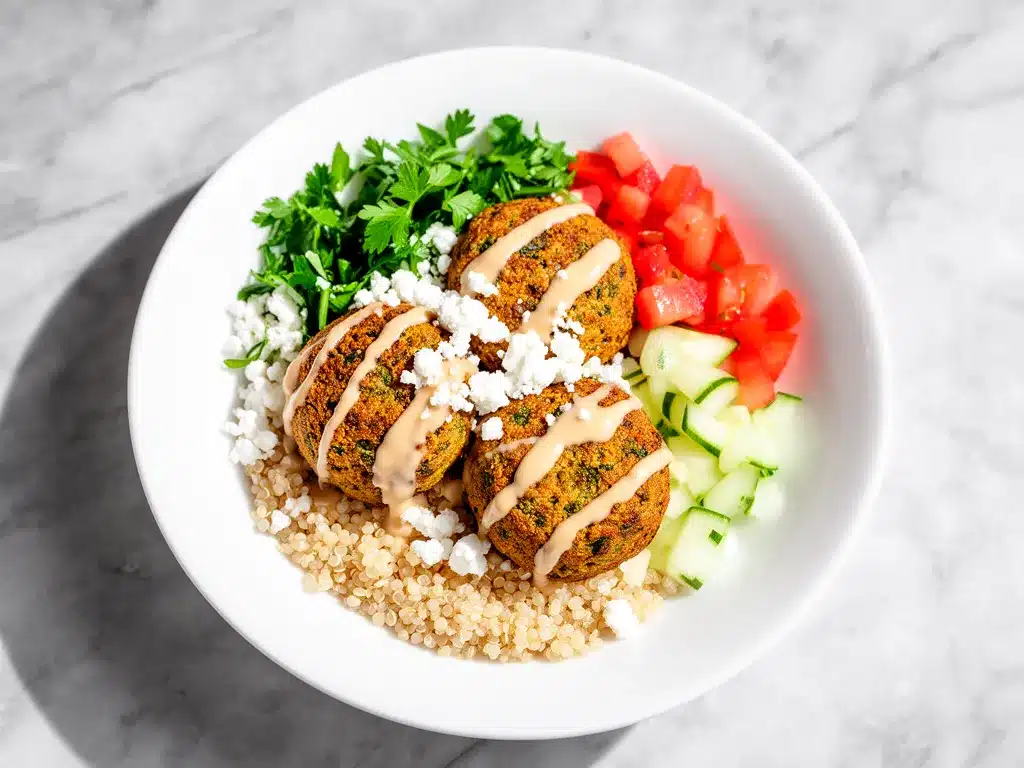
Divide the cooked quinoa or couscous among four bowls. Top with mixed greens, cherry tomatoes, cucumber, red onion, and olives. Add the baked falafel on top. Drizzle generously with tahini sauce. Sprinkle with crumbled feta and pomegranate seeds if using. Drizzle with a little extra olive oil. Serve immediately.
Total Time: About 50 minutes (15 minutes active, 35 minutes mostly hands-off)
Expert Tips & Tricks
Here’s everything I’ve learned from making this dozens of times. These tips will save you from my mistakes.
Don’t Skip the Drying Step
I can’t stress this enough. Wet chickpeas are the number one reason baked falafel fails. They turn mushy instead of crispy. If you’re short on time, use a salad spinner to dry them, then pat with paper towels. It’s worth the extra 5 minutes.
Use a Food Processor, Not a Blender
A blender will puree the mixture too much, making it dense. A food processor chops it finely while keeping some texture. That texture is what makes falafel satisfying to eat. If you must use a blender, pulse in short bursts and check frequently.
Chill the Mixture
If the mixture feels too sticky to handle, chill it in the fridge for 15-20 minutes. Cold mixture is easier to shape and holds together better. I often prep the mix in the morning and bake it at night.
Flatten, Don’t Round
Ball-shaped falafel cook unevenly. Flattening them into patties ensures they brown evenly on all sides. Aim for about ½ inch thick. Thicker patties might not cook through; thinner ones might burn.
Spray, Don’t Pour
Lightly spray the falafel with olive oil. Pouring oil makes them greasy. You just want a thin coating to help them brown. I use an olive oil spray bottle—it’s cheap and makes this step easy.
Common Mistakes (and how to avoid them):
Mistake: Falafel falls apart
Fix: The mixture was too wet or you didn’t press the chickpeas dry enough. Add a tablespoon of breadcrumbs or flour to bind it. Also, let them cool for 5 minutes after baking—they firm up as they cool.
Mistake: Sauce is too thick
Fix: Tahini thickens as it sits. Add warm water a teaspoon at a time until it’s pourable. Also, make sure you’re using warm water, not cold. Cold water can make the sauce grainy.
Mistake: Falafel is bland
Fix: Falafel needs to be well-seasoned. Taste the raw mixture before baking. It should taste slightly stronger than you want the final product to be, as baking dulls flavors. Add more cumin, garlic, or salt if needed.
Variations & Substitutions
Once you’ve nailed the basic version, here’s how you can mix it up. I’ve tried all of these.
Veggie-Loaded
Roast some sweet potatoes or butternut squash with the falafel. Add them to the bowl for extra sweetness and texture. I do this in winter—it makes the bowl more hearty.
Protein Boost
Add grilled chicken, shrimp, or tofu. I’ve even added canned white beans for extra fiber. If you’re not vegetarian, grilled chicken is a great addition. Just season it with the same spices as the falafel.
Gluten-Free
This recipe is naturally gluten-free if you use quinoa or rice instead of couscous. Check your tahini and chickpeas for cross-contamination if you’re sensitive. I use Barilla gluten-free pasta for other meals, but for this, I stick to quinoa.
Dairy-Free
Skip the feta cheese or use a dairy-free alternative. The tahini sauce is already dairy-free. I make this version for my lactose-intolerant friend, and she loves it.
Spicy Version
Add a pinch of cayenne pepper or red pepper flakes to the falafel mix. Or drizzle with harissa sauce instead of tahini. I like a little heat with my creamy sauce.
Different Grains
Use bulgur wheat, farro, or brown rice. Bulgur is traditional for tabbouleh, so it fits the theme. Farro adds a chewy texture. Brown rice is heartier. All work well.
Serving & Storage
How to Serve:
I usually serve this straight from the bowl at the dinner table—it looks rustic and stays warm. But here are other ways I’ve enjoyed it:
Side Dishes:
– Garlic bread (obviously)
– Simple green salad with balsamic vinaigrette
– Roasted broccoli or green beans
– Hummus (if you want extra protein)
Toppings Bar:
When I have guests, I put out: extra tahini, red pepper flakes, fresh herbs, lemon wedges, crispy chickpeas. Everyone customizes their bowl.
Wine Pairing:
Not a wine expert, but my wine-snob friend says Pinot Grigio or Sauvignon Blanc works great with this. The acidity cuts through the richness of the tahini.
Storage Instructions:
Refrigerator:
Store falafel and sauce separately in airtight containers for up to 4 days. The veggies can be prepped ahead but are best fresh. The falafel loses crispiness in the fridge, so reheat them.
Reheating:
Best method: Reheat falafel in an air fryer or oven at 375°F for 5-7 minutes. This restores crispiness. Microwaving makes them soggy. The sauce can be reheated gently or served cold.
Freezing:
Falafel freezes well! Bake them until just set, let cool, then freeze on a baking sheet. Transfer to a freezer bag. They last up to 3 months. Reheat in the oven from frozen. The sauce does not freeze well.
Meal Prep:
Make falafel and sauce on Sunday. Store veggies in separate containers. Assemble bowls fresh each night. Takes 5 minutes and tastes way better than fully reheated meals.
Nutrition Information
I’m not a nutritionist, but here’s the breakdown if you’re tracking.
Per Serving (based on 4 servings):
- Calories: 450
- Protein: 18g
- Carbs: 55g
- Fiber: 12g
- Sugar: 8g
- Fat: 18g
- Saturated Fat: 3g
- Cholesterol: 10mg
- Sodium: 650mg
- Calcium: 150mg
What’s Good:
- High in fiber from chickpeas and veggies
- Good source of plant-based protein
- Rich in healthy fats from tahini and olive oil
- Loaded with vitamins from fresh vegetables
What to Know:
- Higher in calories due to tahini and olive oil
- Contains sesame (tahini)
- Moderate sodium (use low-sodium chickpeas to reduce)
My Take:
Look, this is healthy comfort food. It’s not a diet recipe, but it’s way better than takeout, costs less, and I know exactly what’s in it. When I want to make it lighter, I reduce the tahini and load up on vegetables. But usually? I just eat a reasonable portion and enjoy it.
Final Thoughts
So that’s my Mediterranean baked falafel bowl! I’ve probably talked your ear off at this point, but when you make a recipe this often, you have a lot to say about it.
This has saved weeknight dinners more times than I can count. It’s my answer to “what’s for dinner” when I’m tired, don’t want takeout, and still want something that tastes really good. My kids are happy, my husband’s happy, and I’m happy because I’m not stressed about cooking. It’s fresh, it’s flavorful, and it’s fast.
Make it yours! Try different add-ins, swap in your favorite vegetables, adjust the garlic (though more is always better in my opinion). The best recipes are the ones you adapt to your family’s tastes.
If you make this, drop a comment and let me know what you think! I love hearing how recipes turn out in your kitchen. And if something doesn’t work, tell me that too—I’m here to help troubleshoot. And if you’re looking for more healthy weeknight ideas, check out my cheesy broccoli and chicken fritters—they’re a family favorite too!
Happy cooking! And I hope your kitchen smells half as good as mine does right now.
Frequently Asked Questions
Can I use canned chickpeas?
Yes! Canned chickpeas are perfect for this recipe. Just drain them well and pat them dry. Cooking chickpeas from dry takes hours and changes the texture, so canned is the way to go for speed and convenience.
Why did my falafel fall apart?
This usually happens if the mixture was too wet. Make sure you dry the chickpeas thoroughly. Also, let the falafel cool for 5 minutes after baking—they firm up as they cool. If they’re still crumbling, add a tablespoon of breadcrumbs or flour to the next batch.
Can I make the tahini sauce ahead?
Absolutely. The sauce actually tastes better after sitting for an hour, as the flavors meld. Store it in an airtight container in the fridge for up to 5 days. It will thicken in the fridge—just whisk in a little warm water to loosen it up before serving.
Is this recipe gluten-free?
Yes, if you use quinoa or rice instead of couscous. Check your tahini and chickpeas for cross-contamination if you have celiac disease. Most plain tahini and canned chickpeas are naturally gluten-free.
Can I bake the falafel in advance?
Yes! Bake them up to 2 days ahead. Store them in the fridge and reheat in the oven or air fryer to restore crispiness. They don’t freeze well if baked, but you can freeze the raw mixture and bake them fresh later.
What can I use instead of tahini?
If you don’t have tahini, you can make a quick lemon-olive oil sauce. Mix olive oil, lemon juice, garlic, and salt. It won’t be as rich or creamy, but it’s still delicious. Or try a yogurt-based sauce with lemon and garlic.
How do I store leftovers?
Store falafel and sauce separately in airtight containers in the fridge for up to 4 days. Veggies are best fresh, but you can store them for 2-3 days. Reheat falafel in the oven or air fryer. Microwave makes them soggy.
Pin This Recipe!
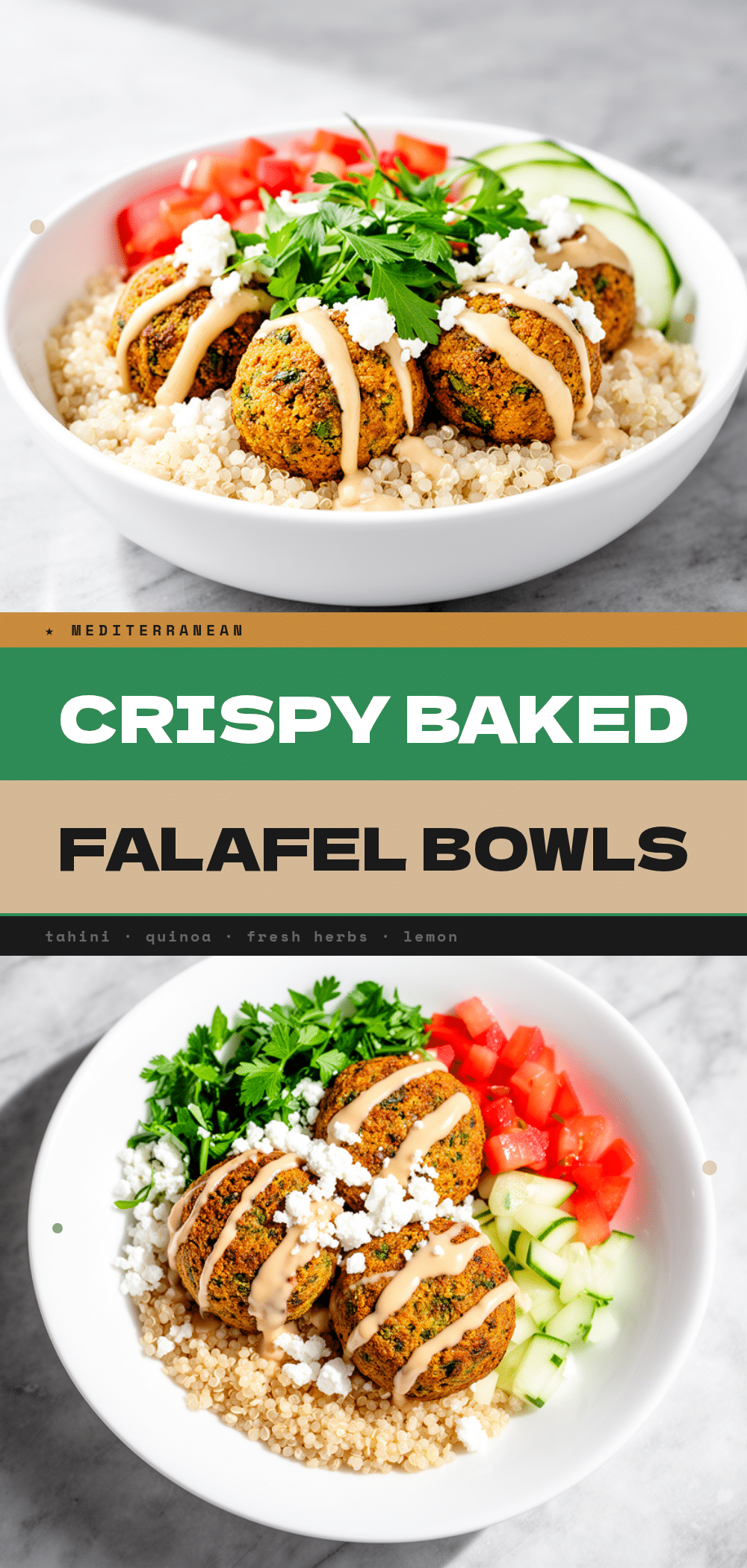
Mediterranean Baked Falafel Bowls: 5-Ingredient Healthy Dinner
- Total Time: 50 minutes
- Yield: 4 servings 1x
Description
A healthy, vibrant weeknight dinner featuring crispy baked falafel made with chickpeas and fresh herbs, served over quinoa with a creamy tahini sauce and fresh Mediterranean vegetables.
Ingredients
- 2 cans (15oz each) canned chickpeas, drained and patted dry
- 1 cup packed fresh flat-leaf parsley
- 1/2 cup packed fresh cilantro
- 4 cloves garlic, minced
- 2 tablespoons tahini
- 1 teaspoon ground cumin
- 1/2 teaspoon smoked paprika
- 1 teaspoon baking powder
- 1 teaspoon salt
- 1/2 teaspoon black pepper
- 1/4 cup tahini (for sauce)
- 3 tablespoons fresh lemon juice
- 1 clove garlic, minced (for sauce)
- 2–4 tablespoons warm water (for sauce)
- 1/2 teaspoon salt (for sauce)
- 1 cup cooked quinoa or couscous
- 1 cup cherry tomatoes, halved
- 1 medium cucumber, diced
- 1/4 cup red onion, thinly sliced
- 1/2 cup feta cheese, crumbled
- 2 cups mixed greens (arugula and spinach)
- 1/4 cup Kalamata or black olives
- Olive oil spray
- 1/4 cup pomegranate seeds (optional)
Instructions
- Preheat oven to 400°F (200°C). Line two baking sheets with parchment paper.
- Drain and rinse chickpeas, then pat them completely dry with paper towels to remove excess moisture.
- In a food processor, combine dried chickpeas, parsley, cilantro, garlic, tahini, cumin, smoked paprika, baking powder, salt, and pepper. Pulse until finely chopped, then process until a thick, sticky paste forms.
- Scoop tablespoon-sized portions of the mixture and roll into balls, then gently flatten into patties about 1/2 inch thick. Place on baking sheets, leaving space between them.
- Lightly spray the tops of the falafel with olive oil.
- Bake for 20-25 minutes, flipping halfway through, until golden brown and crispy. Let cool for 5 minutes to firm up.
- While falafel bakes, whisk tahini and lemon juice in a small bowl until thick. Gradually whisk in warm water until pourable. Stir in minced garlic and salt.
- Assemble bowls by dividing cooked quinoa among four bowls. Top with mixed greens, tomatoes, cucumber, red onion, and olives.
- Place baked falafel on top of the bowls. Drizzle generously with tahini sauce and sprinkle with feta cheese and pomegranate seeds if using.
Notes
Ensure chickpeas are thoroughly dried before processing to achieve crispy falafel. The mixture can be chilled for 15-20 minutes if it is too sticky to handle. Falafel can be frozen before baking or after baking for up to 3 months. Reheat in an air fryer or oven to restore crispiness.
- Prep Time: 15 minutes
- Cook Time: 35 minutes
- Category: Main Course
- Cuisine: Mediterranean
Nutrition
- Serving Size: 1 bowl per serving
- Calories: 450
- Sugar: 8
- Sodium: 650
- Fat: 18
- Saturated Fat: 3
- Carbohydrates: 55
- Fiber: 12
- Protein: 18
Keywords: falafel, baked falafel, healthy dinner, Mediterranean bowl, tahini sauce, chickpea recipe, vegetarian dinner, meal prep, gluten-free option