It was 5:15 PM on a Tuesday, and I was staring into the abyss of my refrigerator. The light flickered, illuminating a sad head of lettuce, a jar of pickles that had seen better days, and a single, lonely salmon fillet that had been waiting for me to remember it since Sunday. My brain was fried. I didn’t want to chop. I didn’t want to debate what to cook. I definitely didn’t want to wait forty-five minutes for the delivery guy to find my apartment.
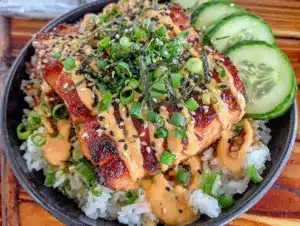
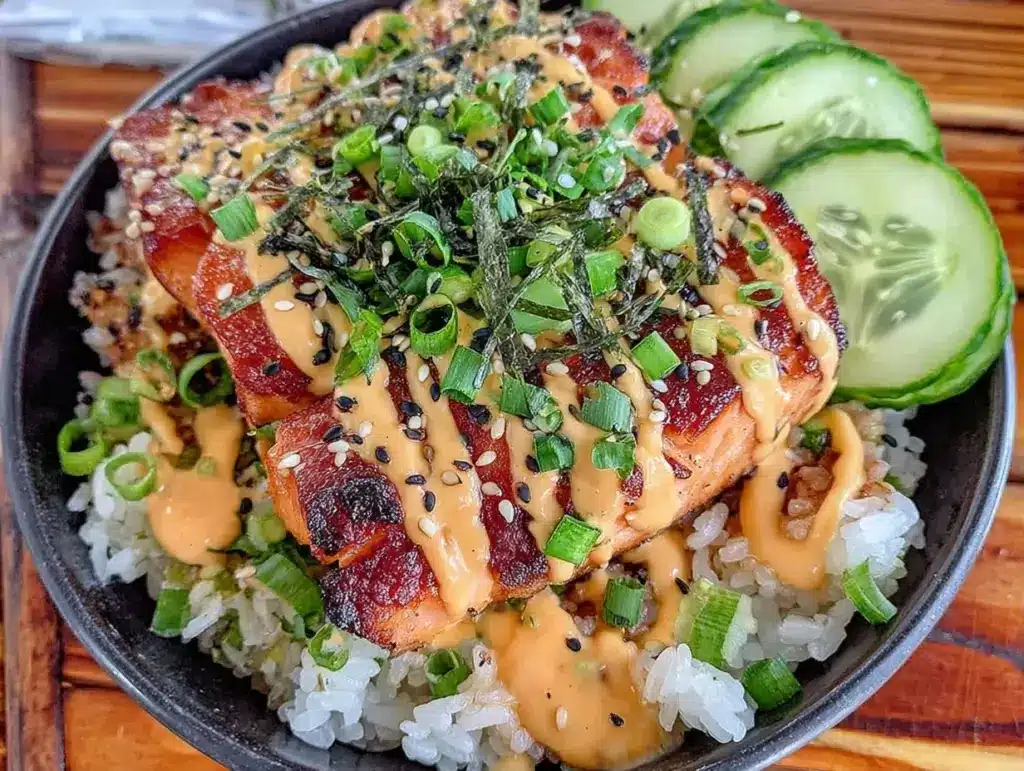
So I did what I do best when I’m desperate: I threw together a salmon rice bowl. I wasn’t aiming for fancy. I was aiming for edible. But somehow, between the spicy mayo drizzle, the crisp cucumber, and the flaky salmon, I ended up with dinner that was better than anything I could order from a sushi spot or a takeout place down the street.
This salmon rice bowl is my secret weapon for those “5pm and nothing planned” moments. It’s fast, it’s fresh, and it tastes like I actually tried. Plus, the cleanup? A single bowl and a cutting board. That’s it. If you’re tired of the same old chicken dinners or staring at a delivery menu wondering if you’ll ever see your wallet again, this is your answer.
I’ve made this at least a dozen times in the last month. Sometimes I use fresh salmon, sometimes I use frozen (thawed in cold water, don’t judge me). Sometimes I’m too tired to make spicy mayo from scratch and use a store-bought version. But the core concept remains: warm rice, cool veggies, rich fish, and that killer sauce that ties it all together. It’s the kind of meal that makes you feel like a grown-up chef without the stress.
Why You’ll Love This Recipe
There are about ten reasons I keep coming back to this salmon rice bowl, but here are the big ones that make it a permanent fixture in my rotation.
Stupid Simple Assembly — Seriously, if you can open a package of rice and slice a cucumber, you can make this. I’ve made this while holding a crying baby on one hip. It’s that easy. There’s no complex technique, no timing nightmares. You cook the rice, you prep the toppings, you assemble. Done.
Lightning Fast — From start to finish, this takes about 20 minutes. Most of that time is just the rice cooking. You’re actively doing something for maybe 10 minutes. That’s faster than waiting on hold with a pizza place. I make this on weeknights when I get home at 7pm and realize I haven’t started dinner.
The Sauce Changes Everything — I know, I know, the salmon is great. But the spicy mayo? That’s the star. It’s creamy, tangy, and just spicy enough to wake up your taste buds. Once you taste it, you’ll never go back to plain soy sauce again. It’s the difference between “meh” and “wow.”
Customizable AF — Hate spicy? Skip the chili oil. Love avocado? Pile it on. Using up leftover rice? Perfect. This recipe is a blank canvas. I tweak it every time based on what’s in my fridge. It’s the ultimate way to use up random ingredients before they go bad.
Healthy Without Being Sad — It’s got protein, healthy fats from the salmon, and fresh veggies. It’s not a diet meal, but it doesn’t feel like a cheat either. It feels like fuel. I feel energized after eating this, not sluggish and sleepy like I do after a heavy pasta dish or a heavy burger.
This is my go-to when I need dinner to just work. No complicated techniques, no weird ingredients you can’t pronounce, just reliable, delicious food that makes everyone happy. My kids love it because it’s familiar (rice and fish) but exciting (spicy mayo!).
Ingredients You’ll Need
Here’s the best part: you probably have most of this already. This isn’t a recipe that requires a trip to three different specialty stores. It’s pantry-friendly with a few fresh additions.
For the Base:
Sushi rice or short-grain white rice (1 cup / 180g) — This is non-negotiable if you want that sticky, clumpy texture that holds the bowl together. Long-grain rice like basmati will be too dry and fluffy. It won’t stick to the salmon. I buy a big bag of Kokuho Rose or any brand labeled “sushi rice.” It keeps for months in the pantry.
Water (1 ¼ cups / 300ml) — For cooking the rice. The ratio matters. Too much water and it’s mush. Too little and it’s hard. I use the measuring cup that came with my rice cooker, but a standard 1:1.25 ratio works in a pot too.
Rice vinegar (1 tablespoon / 15ml) — This adds that tangy sushi rice flavor. You can use white vinegar in a pinch, but rice vinegar is smoother and less harsh. Don’t skip it; it balances the richness of the salmon.
Sugar (1 teaspoon / 5g) — Just a little bit to balance the vinegar. You don’t want sweet rice, just balanced rice.
Salt (½ teaspoon / 3g) — Season the rice lightly. Again, balance is key.
For the Salmon:
Salmon fillets (2 large or 4 small, about 1.5 lbs / 700g) — Fresh is best, but frozen works fine. Look for skin-on or skinless based on your preference. I usually buy skin-on because it’s cheaper and I like the crispy skin, but you can easily remove it. Pat it dry! Wet salmon steams instead of sears.
Neutral oil (2 tablespoons / 30ml) — I use avocado oil or canola oil. Olive oil burns too easily at high heat. You want a nice sear, not a burnt mess.
Garlic (2 cloves, minced / about 1 tablespoon) — Fresh garlic is essential. Jarred garlic tastes metallic in a sear. Minced fine so it doesn’t burn.
Ginger (1 teaspoon, grated / about 5g) — Fresh ginger adds that bright, zesty note. Grated or minced fine. If you don’t have fresh, ½ teaspoon of ground ginger works, but fresh is better.
Soy sauce (1 tablespoon / 15ml) — Low-sodium is better so you can control the saltiness. It adds umami depth to the fish.
For the Spicy Mayo:
Mayonnaise (¼ cup / 60g) — I use Japanese Kewpie mayo if I can find it. It’s richer and more tangy than standard American mayo. But regular Hellmann’s or Hellman’s works too. Just don’t use light mayo; it’s too watery.
Sriracha (1-2 teaspoons / 5-10g) — Depends on how spicy you like it. Start with 1 teaspoon, taste, and add more if needed. I like it hot, so I use 2 teaspoons.
Lime juice (1 teaspoon / 5ml) — Fresh squeezed. Bottled lime juice tastes like cleaner fluid. Trust me. It cuts through the richness of the mayo.
For the Toppings:
Cucumber (1 medium, sliced or julienned / about 150g) — English cucumbers are best because they have fewer seeds and thinner skin. Slice them thinly. They add a cool, crisp contrast to the warm fish.
Avocado (1 ripe, sliced / about 150g) — Creamy, rich, and adds healthy fats. If avocados are too expensive or you’re out, skip it. But they really elevate the bowl.
Green onions (2 stalks, thinly sliced / about 20g) — For color and a mild onion bite. The white parts and green parts both work.
Edamame (½ cup / 75g, shelled) — Optional, but adds protein and a nice pop of green. Frozen edamame is super cheap and easy to thaw.
Seaweed salad or nori strips (optional) — For that authentic sushi feel. I usually just use nori strips from the snack aisle. It’s a fun crunch.
Optional Add-ins:
Carrots (1 small, julienned) — Adds sweetness and crunch. I often use a peeler to make ribbons.
Kimchi (½ cup, chopped) — For an extra kick and probiotics. It changes the flavor profile to Korean-inspired, which is delicious.
Sesame seeds (1 tablespoon) — Toasted sesame seeds are a must for garnish. They add nutty flavor and texture. Buy them pre-toasted or toast them in a dry pan for 2 minutes.
Equipment Needed
You don’t need fancy equipment for this. Here’s what I actually use.
Rice cooker or medium saucepan with lid — I use a rice cooker because it’s set-it-and-forget-it. But a saucepan works just as well. Just make sure it has a tight-fitting lid to trap the steam.
Large skillet — 10-12 inch works best for the salmon. I prefer stainless steel or cast iron for a good sear, but non-stick is easier for cleanup. If you use non-stick, use less oil to prevent burning.
Sharp knife — For slicing the salmon and veggies. A dull knife will tear the salmon. Learn to sharpen your knives, or just buy a good one. It makes everything easier.
Cutting board — Any size works. I use a medium plastic one. Easy to clean.
Small bowl — For mixing the spicy mayo. A ramekin or a small mixing bowl works.
Fork or spatula — To flake the salmon and flip the fish. A spatula is better for flipping. A fork is better for flaking.
Rice paddle or spoon — To fluff the rice. A wooden spoon works too, but a paddle is nicer for not scratching the pot.
Measuring cups and spoons — Standard stuff. Dollar store versions work fine for this.
Optional but nice:
Mandoline slicer — If you want perfectly thin cucumber slices, a mandoline is great. But be careful! I’ve cut myself more times than I’d like to admit. Use the guard.
Microplane — For grating the ginger and garlic. It makes a fine paste that cooks evenly. A regular grater works too, but it’s chunkier.
How to Make It: Step-by-Step
Alright, let’s make this! I’m walking you through exactly how I do it, including the little tricks I’ve picked up.
Step 1: Cook the Rice (20-25 minutes)
Rinse the rice. Seriously, rinse it until the water runs clear. This removes excess starch and prevents it from being gummy. Add the rice and water to your pot or rice cooker. Add the vinegar, sugar, and salt. Stir gently. Bring to a boil, then reduce to low heat, cover, and simmer for 15-18 minutes. Do not lift the lid! Steam is your friend. Once done, remove from heat and let it sit, covered, for 10 minutes. Then fluff it with a paddle. This step takes time, but it’s mostly hands-off. While the rice cooks, you can prep everything else.
Step 2: Make the Spicy Mayo (2 minutes)
In a small bowl, mix the mayonnaise, sriracha, and lime juice. Whisk until smooth and creamy. Taste it. Is it spicy enough? Add more sriracha. Is it too thick? Add a splash more lime juice or water. Set it aside. It will thicken slightly as it sits. This is the flavor bomb of the bowl, so get it right.
Step 3: Prep the Veggies (5-8 minutes)
While the rice is cooking, prep your toppings. Slice the cucumber into thin half-moons. Julienne the carrot if you’re using it. Slice the avocado. Chop the green onions. Shred the nori if you have it. Get everything ready and set aside in small piles. I like to arrange them on a plate or in small bowls so they’re easy to grab when assembling. This is called *mise en place*, but I just call it “not being stressed while cooking.”
Step 4: Sear the Salmon (5-7 minutes)
Pat the salmon fillets dry with paper towels. Moisture is the enemy of a good sear. Season both sides with salt and pepper. Heat the oil in your skillet over medium-high heat. Once the oil shimmers, add the salmon fillets skin-side down (if skin-on). Press down gently with a spatula to prevent curling. Cook for 3-4 minutes until the skin is crispy and the color has changed halfway up the side. Flip carefully. Add the minced garlic and ginger to the pan around the salmon (not on top, or they’ll burn). Cook for another 2-3 minutes, basting the salmon with the garlic-ginger oil. Add the soy sauce to the pan and let it bubble for 30 seconds. Remove salmon from the pan and let it rest for 2 minutes. This lets the juices redistribute. Don’t skip the rest!
Step 5: Assemble the Bowls (3 minutes)
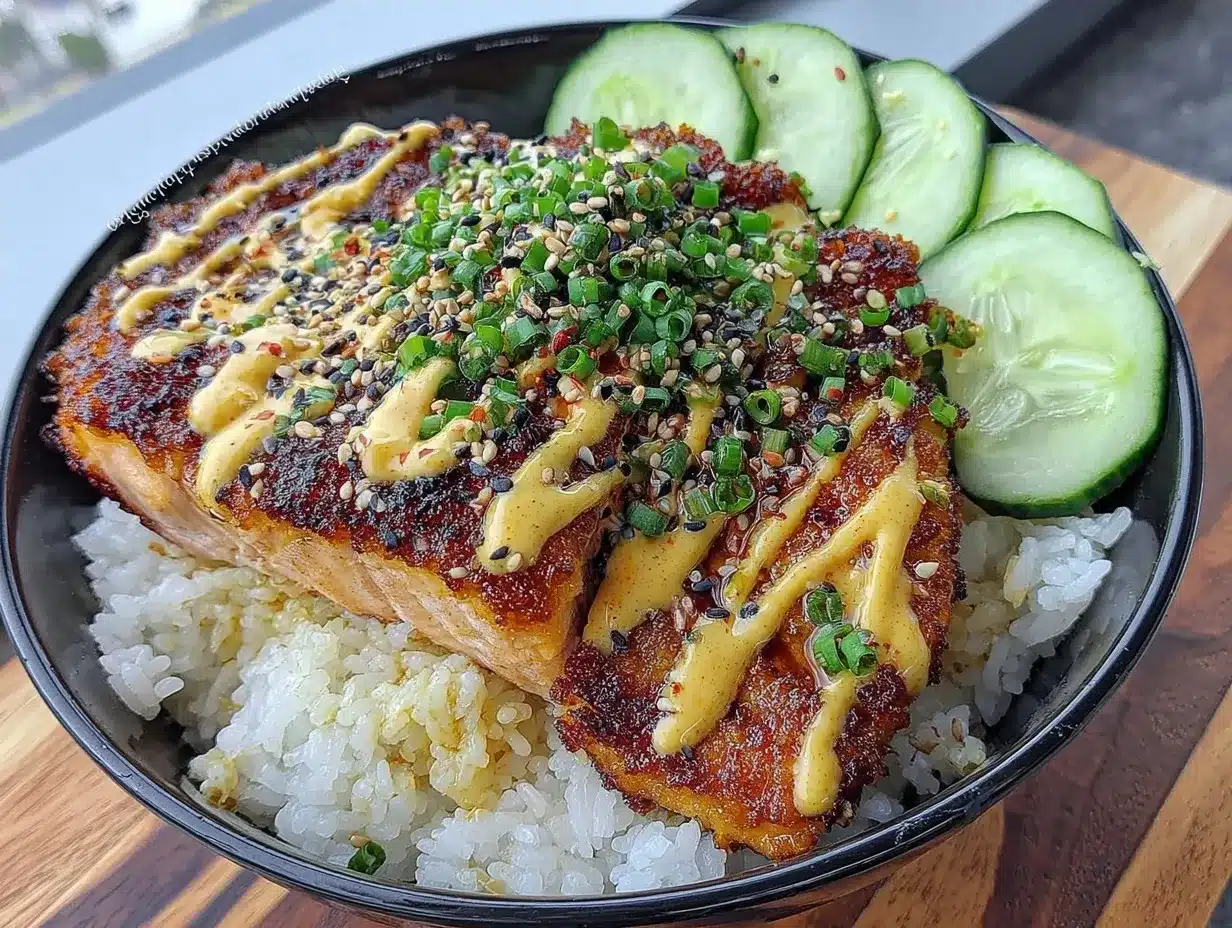
Take your serving bowls. Scoop a generous portion of warm rice into the bottom. Flake the salmon into large chunks. Arrange the salmon, cucumber, avocado, edamame, and carrots on top of the rice. Don’t just pile it randomly; try to make it look pretty. We eat with our eyes first. Drizzle the spicy mayo generously over everything. Sprinkle with green onions and toasted sesame seeds. Add nori strips or seaweed salad if you’re feeling fancy.
Step 6: Serve Immediately
Eat it while the rice is warm and the salmon is flaky. Mix it all together before you take the first bite, or eat it component by component. Both ways are delicious. Just don’t let it sit too long, or the rice will get cold and the avocado will brown.
Total Time: About 30 minutes (10 minutes active, 20 minutes mostly hands-off)
Troubleshooting:
- Rice is too wet: You used too much water or didn’t let it rest. Next time, use less water or let it sit longer.
- Salmon is stuck to the pan: The pan wasn’t hot enough, or you tried to flip it too soon. Let it sear longer. It will release naturally when ready.
- Sauce is too spicy: Add more mayo or a splash of lime juice to balance it out.
- Avocado is brown: Squeeze a little lemon or lime juice on it to prevent browning, or eat it immediately.
Expert Tips & Tricks
Here’s everything I’ve learned from making this dozens of times. These tips will save you from my mistakes.
Don’t Skip the Rinse
I know it’s annoying, but rinsing the rice is crucial. If you don’t rinse it, the rice will be gummy and sticky in a bad way. You want it to be tender but separate enough to flake. Rinse until the water is clear. It takes about 30 seconds of swishing it around with your hand.
Pat the Salmon Dry
Wet salmon = steamed salmon. You want a sear. Use paper towels to pat it dry, even the sides. If the skin is on, dry it really well. This helps it get crispy instead of rubbery.
Rest the Salmon
When you take the salmon out of the pan, let it rest for 2 minutes before flaking it. This lets the juices redistribute throughout the fillet. If you cut into it immediately, all the juices run out, and you end up with dry fish. Patience pays off.
Toast Your Sesame Seeds
Pre-toasted sesame seeds are okay, but toasting them yourself takes 2 minutes in a dry pan and makes a huge difference. They’ll turn golden and smell nutty. Add them at the end so they don’t burn.
Use Leftover Rice
This recipe works great with leftover rice. In fact, chilled leftover rice is actually better for bowls because it’s firmer and doesn’t get mushy as quickly. If you’re using fresh rice, just let it cool for a few minutes before assembling.
Make Extra Spicy Mayo
Spicy mayo is addictive. I always make double the amount. I keep it in the fridge for up to a week. I use it on sandwiches, burgers, and as a dip for veggies. It’s a pantry staple now.
Common Mistakes (and how to avoid them):
- Mistake: Rice is mushy. Fix: Use less water next time. Or don’t lift the lid while it’s cooking. Steam needs to stay in.
- Mistake: Salmon is dry. Fix: You cooked it too long. Salmon is done when it flakes easily with a fork but is still slightly translucent in the center. Carryover cooking will finish it.
- Mistake: Bowl is too salty. Fix: Use low-sodium soy sauce and rinse your rice. You can always add more salt, but you can’t take it away.
Variations & Substitutions
Once you’ve nailed the basic version, here’s how you can mix it up. I’ve tried all of these.
Tuna Bowl
Swap the salmon for canned tuna or seared ahi tuna. Canned tuna is cheaper and faster. Seared ahi tuna is fancier and cooks in 2 minutes per side. Both work great.
Chicken Bowl
If you’re not a fish person, use grilled chicken breast or thighs. Marinate the chicken in soy sauce and ginger before grilling. It’s just as delicious. I often use leftover rotisserie chicken for this.
Shrimp Bowl
Use large shrimp instead of salmon. Sauté them for 2-3 minutes per side. They cook super fast and add a nice sweetness. Toss them in the garlic-ginger butter too.
Vegetarian Bowl
Skip the fish and add extra avocado, edamame, and roasted sweet potatoes. Or use tofu. Press the tofu, cube it, and pan-fry it until crispy. Drizzle with the spicy mayo. It’s filling and flavorful.
Korean-Inspired Bowl
Add kimchi and a fried egg on top. Use gochujang instead of sriracha in the mayo. It’s a whole different flavor profile but uses the same base.
Spicy Level Variations:
- Low Spice: Use ½ teaspoon sriracha and a dash of honey.
- Medium Spice: 1 teaspoon sriracha (my default).
- High Spice: 2-3 teaspoons sriracha + a dash of chili crisp.
Dietary Modifications:
- Gluten-Free: Use tamari instead of soy sauce. Most rice is naturally gluten-free, but check the label.
- Dairy-Free: This recipe is naturally dairy-free. Just make sure your mayo doesn’t contain dairy (most don’t).
- Low-Carb: Use cauliflower rice instead of regular rice. It takes less time to cook and is much lower in carbs. I use pre-riced cauliflower for speed.
Serving & Storage
How to Serve:
I usually serve this straight from the prep area to the table. It’s casual and fun. But here are other ways I’ve enjoyed it:
Side Dishes:
- Miso soup (adds warmth and umami)
- Edamame with sea salt (simple and classic)
- Seaweed salad (adds texture and minerals)
- Simple cucumber salad with rice vinegar and sesame oil
Storage Instructions:
Refrigerator:
Store components separately. The rice goes in an airtight container for up to 3 days. The cooked salmon lasts 2-3 days. The spicy mayo lasts up to a week. The veggies (except avocado) last 3-4 days. Avocado should be eaten fresh or sprinkled with lemon juice to prevent browning.
Reheating:
Best method: Reheat the rice in the microwave with a splash of water, covered, for 1-2 minutes. This restores the moisture. Reheat the salmon gently in the microwave for 30-60 seconds, or just eat it cold. Cold salmon is delicious in bowls. Reheat the veggies if you want them warm, but raw is crispier.
Freezing:
Honestly, this doesn’t freeze well. The rice gets hard and crumbly when frozen and reheated. The avocado browns. The mayo separates. Make it fresh. If you have leftovers, eat them within 3 days.
Meal Prep:
This is great for meal prep. Cook a big batch of rice on Sunday. Prep the veggies and store them in containers. Cook the salmon fresh each night, or cook a batch on Sunday and reheat gently. The spicy mayo can be made ahead and stored in the fridge. It’s the perfect lunch for work.
Nutrition Information
I’m not a nutritionist, but here’s the breakdown if you’re tracking.
Per Serving (based on 4 servings):
- Calories: 450
- Protein: 30g
- Carbs: 45g
- Fiber: 4g
- Sugar: 5g
- Fat: 18g
- Saturated Fat: 3g
- Cholesterol: 65mg
- Sodium: 600mg
- Calcium: 100mg
What’s Good:
- High protein from the salmon
- Healthy fats from the avocado and salmon
- Fiber from the veggies and rice
- Omega-3s from the salmon
What to Know:
- Higher in calories from the mayo and avocado
- Contains fish and soy
- Moderate sodium (use low-sodium soy sauce to reduce)
My Take:
Look, this is a balanced meal. It’s not a diet recipe, but it’s not junk food either. It’s real food. When I want to make it lighter, I use less mayo and more veggies. But usually? I just enjoy a reasonable portion and feel good about what I’m eating. It’s way better than takeout, costs less, and I know exactly what’s in it.
Final Thoughts
So that’s my go-to salmon rice bowl! I’ve probably talked your ear off at this point, but when you make a recipe this often, you have a lot to say about it.
This has saved weeknight dinners more times than I can count. It’s my answer to “what’s for dinner” when I’m tired, don’t want takeout, and still want something that tastes really good. My kids are happy, my husband’s happy, and I’m happy because I’m not stressed about cooking.
Make it yours! Try different add-ins, swap in your favorite vegetables, adjust the spice level. The best recipes are the ones you adapt to your family’s tastes. If you want something lighter, check out our cozy chicken and wild rice soup for another warm, comforting option. Or if you’re in the mood for something sweet after this, try our vanilla bean panna cotta for a simple, elegant finish.
If you make this, drop a comment and let me know what you think! I love hearing how recipes turn out in your kitchen. And if something doesn’t work, tell me that too—I’m here to help troubleshoot.
Happy cooking! And I hope your kitchen smells half as good as mine does right now.
Frequently Asked Questions
Can I use long-grain rice instead of sushi rice?
You can, but the texture will be different. Long-grain rice is fluffier and less sticky. It won’t hold together in a bowl as well. If you must use long-grain, add a little less water and maybe a teaspoon of sugar to help it stick. But sushi rice or short-grain white rice is best for this recipe.
Can I use canned salmon instead of fresh?
Absolutely! Canned salmon is cheaper and faster. Drain it well and flake it into the bowl. You can eat it cold, or warm it up gently in the microwave. It’s not as fancy as seared salmon, but it’s still delicious and nutritious. I use canned salmon when I’m on a budget.
Why did my rice turn out mushy?
Usually means you used too much water or didn’t rinse the rice enough. Rinsing removes excess starch. Also, make sure you don’t lift the lid while it’s cooking. Steam needs to stay in. If it’s already mushy, you can spread it on a baking sheet and let it cool in the fridge to dry out a bit. It’ll still work for bowls.
Can I make the spicy mayo ahead of time?
Yes! Spicy mayo actually tastes better after it’s sat in the fridge for an hour. The flavors meld together. Store it in an airtight container in the fridge for up to a week. Stir it before using.
How do I know when the salmon is done?
Salmon is done when it flakes easily with a fork and is opaque throughout. The center can be slightly translucent if you like it medium-rare, but most people prefer it fully cooked. If you’re unsure, use a meat thermometer. It should reach 145°F (63°C). But honestly, the flake test is usually enough.
Can I freeze this recipe?
I wouldn’t recommend freezing the assembled bowl. The rice gets hard, the avocado browns, and the mayo separates. It’s best made fresh. You can freeze the cooked salmon for up to 2 months, but the texture will be drier when reheated. Thaw it in the fridge overnight and reheat gently.
What if I don’t have sriracha?
Use any hot sauce you have! Cholula, Tabasco, or even chili crisp work well. Just adjust the amount to your spice tolerance. If you don’t like spice, use a little bit of hot sauce and add a teaspoon of honey to balance it out. Or just skip the spice and use regular mayo with a little lime juice.
Can I use cauliflower rice?
Yes! Cauliflower rice is a great low-carb alternative. Sauté it in a pan for 3-5 minutes until tender. Don’t overcook it, or it’ll get mushy. It works well in this bowl, especially if you’re watching your carb intake. I use pre-riced cauliflower from the frozen section for speed.
Pin This Recipe!
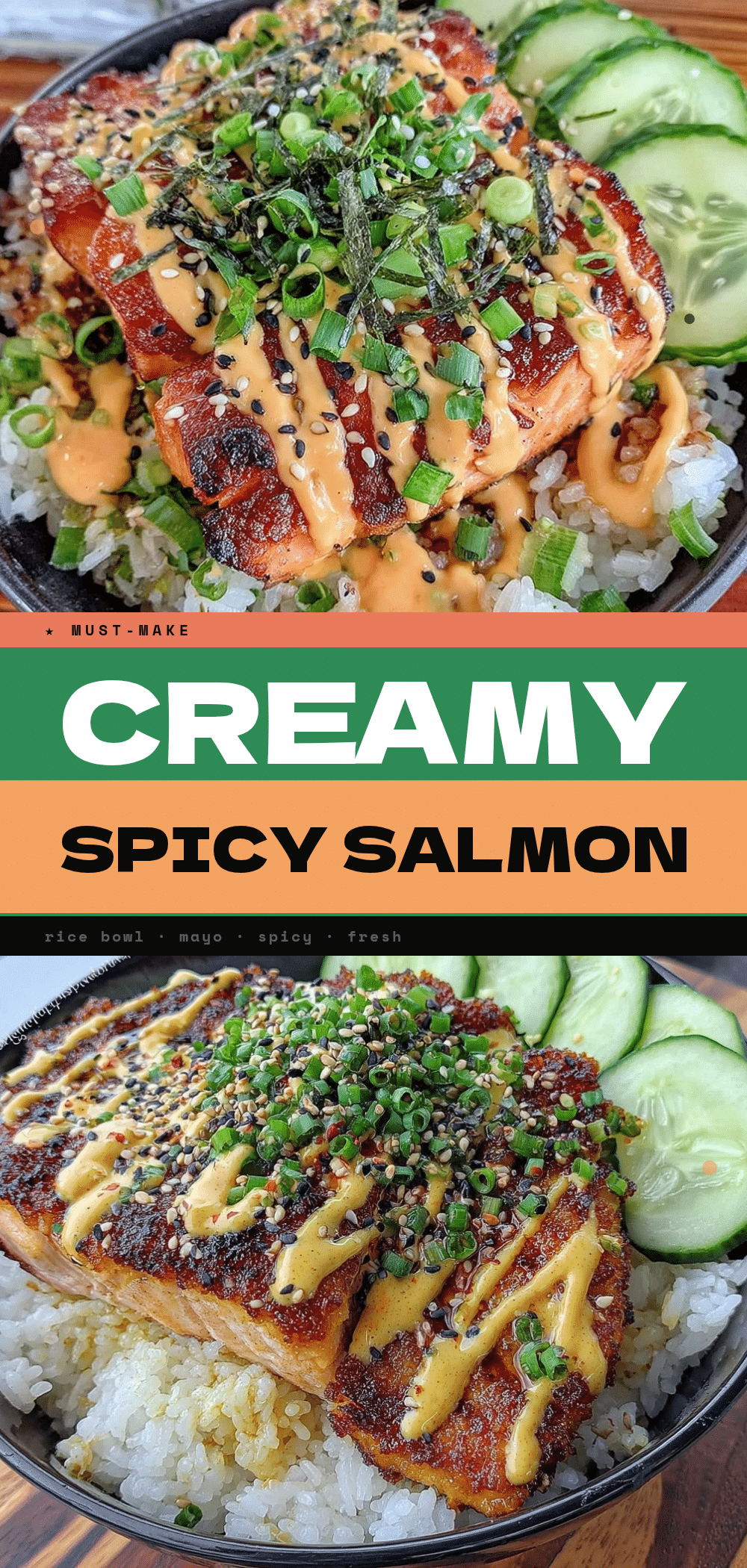

Salmon Rice Bowl: Best Takeout-Style Dinner
- Total Time: 30 minutes
- Yield: 4 servings 1x
Description
A fast, fresh, and customizable salmon rice bowl that tastes better than takeout. Featuring seared salmon, sticky sushi rice, crisp veggies, and a creamy spicy mayo drizzle, this meal is ready in about 30 minutes with minimal cleanup.
Ingredients
- 1 cup sushi rice or short-grain white rice
- 1 ¼ cups water
- 1 tablespoon rice vinegar
- 1 teaspoon sugar
- ½ teaspoon salt
- 2 large or 4 small salmon fillets (about 1.5 lbs / 700g)
- 2 tablespoons neutral oil (avocado or canola)
- 2 cloves garlic, minced
- 1 teaspoon fresh ginger, grated
- 1 tablespoon soy sauce (low-sodium)
- ¼ cup mayonnaise (Japanese Kewpie or regular)
- 1–2 teaspoons sriracha
- 1 teaspoon lime juice
- 1 medium cucumber, sliced or julienned
- 1 ripe avocado, sliced
- 2 stalks green onions, thinly sliced
- ½ cup shelled edamame
- 1 tablespoon toasted sesame seeds
- Nori strips or seaweed salad (optional)
- Salt and pepper to taste
Instructions
- Rinse the sushi rice until the water runs clear. Combine rice, water, vinegar, sugar, and salt in a pot or rice cooker.
- Cook the rice according to your appliance’s instructions or simmer on the stove for 15-18 minutes. Do not lift the lid. Let it rest covered for 10 minutes, then fluff with a paddle.
- While the rice cooks, make the spicy mayo by whisking together mayonnaise, sriracha, and lime juice in a small bowl. Set aside.
- Prep the toppings: slice the cucumber, avocado, and green onions. Julienne carrots if using. Set aside.
- Pat the salmon fillets dry with paper towels. Season both sides with salt and pepper.
- Heat neutral oil in a large skillet over medium-high heat. Add salmon skin-side down (if skin-on). Press gently to prevent curling.
- Cook for 3-4 minutes until skin is crispy and color changes halfway up the side. Flip carefully.
- Add minced garlic and ginger to the pan around the salmon. Cook for 2-3 minutes, basting the salmon with the oil.
- Add soy sauce to the pan and let it bubble for 30 seconds. Remove salmon from pan and let it rest for 2 minutes.
- Assemble the bowls: Place warm rice in the bottom. Flake the salmon and arrange it with cucumber, avocado, edamame, and other toppings.
- Drizzle generously with spicy mayo. Sprinkle with green onions and toasted sesame seeds.
- Serve immediately while the rice is warm.
Notes
Rinsing the rice is crucial to remove excess starch and prevent gumminess. Pat the salmon dry for a better sear. Let the salmon rest after cooking to redistribute juices. Spicy mayo can be made ahead and stored in the fridge for up to a week. For a low-carb version, substitute cauliflower rice for sushi rice.
- Prep Time: 10 minutes
- Cook Time: 20 minutes
- Category: Main Course
- Cuisine: Asian Fusion
Nutrition
- Serving Size: 1 bowl
- Calories: 450
- Sugar: 5
- Sodium: 600
- Fat: 18
- Saturated Fat: 3
- Carbohydrates: 45
- Fiber: 4
- Protein: 30
Keywords: salmon rice bowl, spicy mayo, quick dinner, healthy meal, sushi bowl, weeknight dinner, takeout style, gluten-free option