It was 4:45 PM on a Tuesday, and I was staring at the ceiling, mentally calculating if I could survive on just wine and crackers. My husband had texted three times asking “what’s for dinner?” and my brain had completely short-circuited. I didn’t want to order takeout (too expensive, too greasy), but I also didn’t have the energy to chop, sauté, or scrub a dozen pans. I needed dinner. Fast. Fresh. And hopefully, something that didn’t taste like sadness.
That’s when I decided to raid the freezer for that half-frozen salmon fillet and raid the crisper drawer for the sad-looking cucumber and feta block I’d been meaning to use. I threw them together in about 15 minutes. I didn’t even think it would work. But 15 minutes later, I was sitting at the table with a bowl that smelled like summer, my kids were actually eating vegetables, and I hadn’t touched a single dirty pan except the one I cooked the fish in.
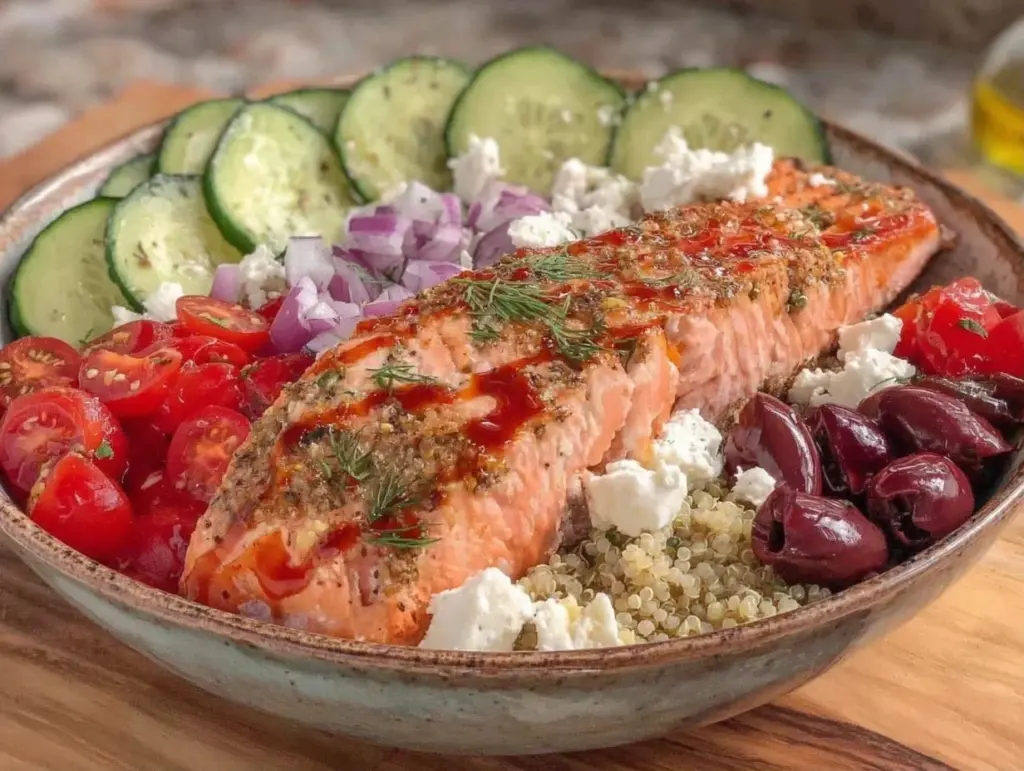
That Mediterranean Salmon Bowl with Cucumber and Feta has been my savior ever since. Seriously, I’ve made it at least a dozen times in the last month. It’s become my go-to answer for those “5pm and nothing planned” emergencies. It’s light, it’s packed with protein, and it tastes like I spent hours prepping when I really just threw it together while waiting for the rice to boil.
If you’re tired of the same old chicken and rice rotation, or if you just need a dinner that feels healthy but actually tastes indulgent, this is it. It’s the kind of meal that makes you feel good about yourself without requiring a culinary degree or an hour of free time.
Why You’ll Love This Salmon Bowl Recipe
Look, I’m not going to lie to you. Cooking fish can be intimidating. You’re always worried about it drying out or smelling up the whole house. But this bowl changes everything. Here’s why I keep coming back to it, and why I think you will too:
- Zero Stress Cooking — Seriously, if you can boil water and open a jar, you can make this. I’ve made this while on a work call (sound on mute, obviously). The salmon bakes or pan-sears with almost zero babysitting.
- 15 Minutes or Less — From opening the fridge to taking the first bite, it’s a quick 15-minute window. That’s faster than waiting for a pizza delivery. I make this on weeknights when I’m exhausted, and it always comes through.
- Healthy Without Being “Diet Food” — It’s full of omega-3s, fresh veggies, and good fats, but it doesn’t taste like cardboard. The feta and the lemon dressing make it taste rich and satisfying. My husband, who usually complains about “rabbit food,” asks for seconds.
- Minimal Cleanup — This is huge for me. One baking sheet (or skillet), one bowl for mixing the dressing, and maybe a pot for grains if you use them. I hate doing dishes, so this low-cleanup factor is a major selling point.
- Make-Ahead Friendly — I often chop the veggies and mix the dressing on Sunday. By Wednesday, I just have to cook the fish and assemble. It feels like cheating, but it’s just smart meal prep.
This isn’t just a salad. It’s a complete, comforting meal that fits into a busy schedule. It’s the kind of dinner that leaves you feeling energized, not sluggish, which is exactly what I need after a long day.
Ingredients You’ll Need
Here’s the best part: you probably have most of this already. This recipe relies on simple, fresh ingredients that come together in a flash. I’m not asking you to go to three different specialty stores.
For the Salmon
Salmon fillets (4 pieces, about 6oz each) — I use wild-caught sockeye or Atlantic salmon. Wild tastes better and is usually leaner, but farmed works too if that’s what’s on sale. Make sure they’re roughly the same thickness so they cook evenly.
Extra virgin olive oil (2 tablespoons) — Don’t skimp here. Good oil makes a big difference in the flavor. I keep a bottle of extra virgin for finishing and a regular one for cooking, but for this, extra virgin is your friend.
Garlic powder (1 teaspoon) — I use garlic powder because it sticks to the fish better than fresh garlic, which can burn in the oven. Fresh minced garlic works if you prefer, but keep an eye on it.
Smoked paprika (1 teaspoon) — This is the secret weapon. It adds that smoky, Mediterranean vibe without any work. If you don’t have it, regular paprika works, but smoked is better.
Salt and black pepper — To taste. I use kosher salt because it’s easier to sprinkle evenly.
For the Bowl Base
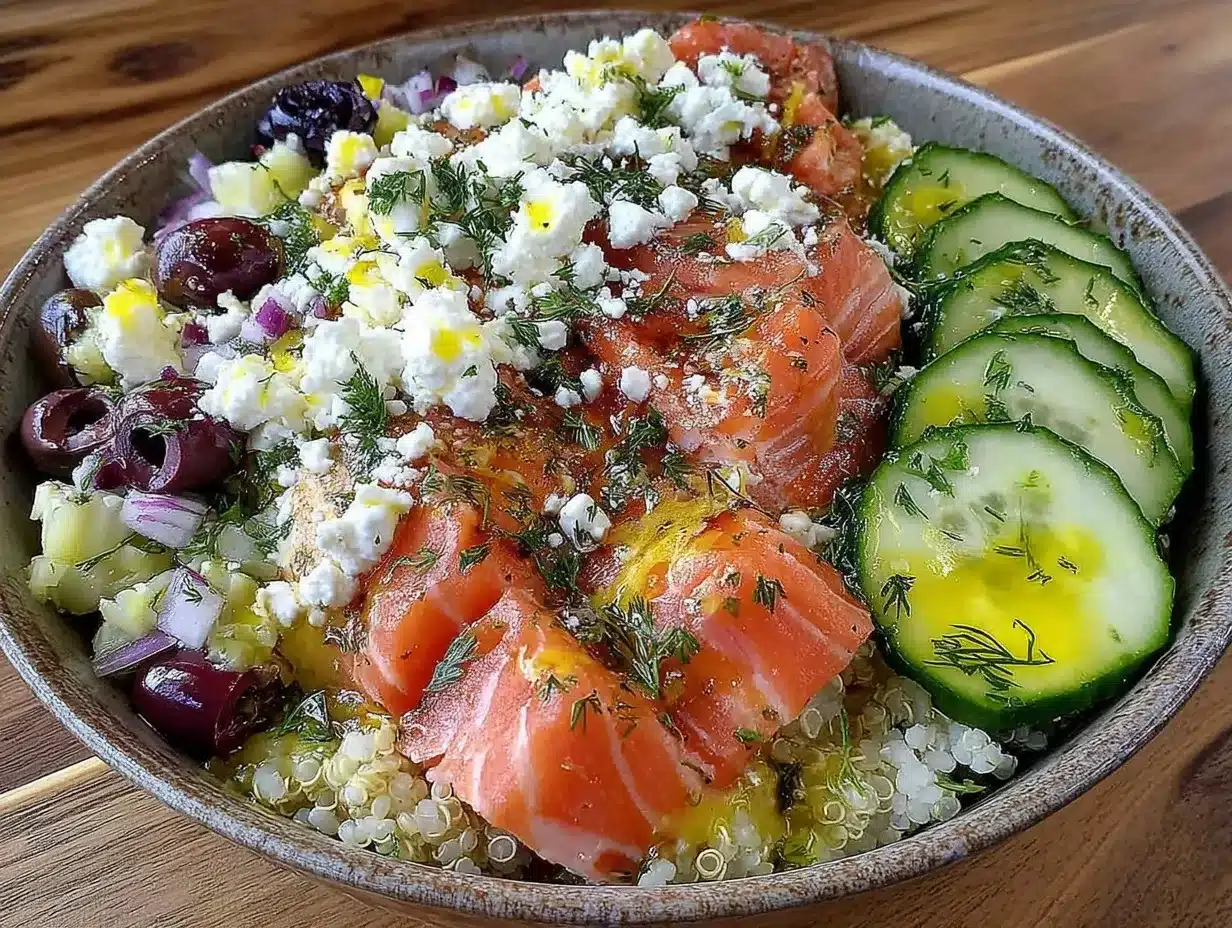
Quinoa or couscous (1 cup dry) — I alternate between these. Quinoa is gluten-free and protein-packed. Couscous is faster (5 minutes!) and lighter. Both work beautifully. You can also use rice, but quinoa has a nicer texture for bowls.
Chicken or vegetable broth (1.5 cups) — Cooking the grains in broth instead of water adds so much flavor. I always keep low-sodium broth in the pantry.
For the Fresh Toppings
Cucumber (1 English cucumber, diced) — English cucumbers are better because they have fewer seeds and thinner skins. Regular cucumbers work, but peel them first. They add this cool, crisp contrast to the warm fish.
Cherry tomatoes (1 cup, halved) — Sweet burst of flavor. I buy the pre-washed bags for convenience. Red or yellow cherry tomatoes look pretty too.
Feta cheese (½ cup, crumbled) — The salty, tangy star of the show. Buy a block and crumble it yourself if you can. Pre-crumbled feta has that weird dusty texture and doesn’t taste as fresh.
Kalamata olives (¼ cup, sliced) — Optional, but highly recommended. They add that briny Mediterranean punch. If you hate olives, skip them, but don’t say I didn’t warn you.
For the Lemon-Herb Dressing
Fresh lemon juice (3 tablespoons) — Squeeze it yourself. Bottled lemon juice tastes flat and bitter in this context. You need about two lemons.
Extra virgin olive oil (3 tablespoons) — For the dressing emulsion.
Dried oregano (1 teaspoon) — Mediterranean flavor in a pinch. Fresh oregano works too, but dried is more potent and traditional here.
Maple syrup or honey (1 teaspoon) — Just a tiny bit to balance the acidity of the lemon. You won’t taste the sweetness, I promise.
Garlic (1 clove, minced) — Fresh garlic in the dressing adds a nice bite. If you’re sensitive to raw garlic, skip it or use a tiny pinch of garlic powder.
Equipment Needed
You don’t need fancy gadgets for this. Here’s what I actually use:
Baking sheet — I line mine with parchment paper for zero cleanup. If you don’t like parchment, lightly grease the pan. A rimmed baking sheet is best so the oil doesn’t spill over.
Small skillet — If you prefer pan-seared salmon instead of baked, a 10-inch skillet works perfectly. Cast iron is great, but stainless steel is easier to deglaze.
Medium saucepan — For cooking the quinoa or couscous. Any pot that holds 2-3 cups works.
Small bowl — For whisking the dressing. A ramekin or even a large mug works.
Whisk — Or a fork. You just need to emulsify the oil and lemon juice.
Large mixing bowls — For assembling the final bowls. I use two large ones so everyone can build their own.
Knife and cutting board — Standard stuff. Sharp knife makes dicing the cucumber way easier and less scary.
How to Make It: Step-by-Step
Alright, let’s make this! I’m walking you through exactly how I do it, including the little tricks I’ve picked up so you don’t end up with dry fish or mushy grains.
Step 1: Prep the Grains (Start Here!)
While the salmon cooks, you need your base ready. Rinse your quinoa (if using) under cold water until the water runs clear. This removes the bitter saponin coating. In a saucepan, combine the quinoa, broth, and a pinch of salt. Bring to a boil, then reduce heat to low, cover, and simmer for 15 minutes. If using couscous, just pour boiling broth over it, cover, and let sit for 5 minutes. Fluff with a fork. Set aside. This step is mostly hands-off, so use this time to prep the veggies.
Step 2: Season the Salmon
Preheat your oven to 400°F (200°C). Pat the salmon fillets dry with paper towels. This is crucial—wet fish steams instead of roasting. In a small bowl, mix the olive oil, garlic powder, smoked paprika, salt, and pepper. Brush this mixture generously over the top of each salmon fillet. Don’t worry about the bottom; the heat will penetrate anyway. Let them sit while you prep the veggies.
Step 3: Prep the Veggies
While the grains cook and the salmon rests, dice your cucumber. Halve your cherry tomatoes. Slice your olives. Crumble your feta. Having everything prepped (mise en place) makes the assembly feel easy and organized. I like to keep the feta separate until the end so it doesn’t get soggy.
Step 4: Cook the Salmon
Place the salmon fillets skin-side down (if skin-on) on the lined baking sheet. Bake for 12-14 minutes. The fish is done when it flakes easily with a fork and is opaque throughout. If your fillets are very thick, they might need an extra minute. If they’re thin, check at 10 minutes. Don’t overcook it! Salmon continues to cook slightly after you take it out of the oven.
Step 5: Make the Dressing
In your small bowl, whisk together the fresh lemon juice, olive oil, dried oregano, maple syrup, minced garlic, salt, and pepper. Whisk vigorously until it looks creamy and emulsified. This shouldn’t take more than 30 seconds. Taste it. If it’s too sour, add a tiny bit more honey. If it’s too bland, add more salt or lemon.
Step 6: Assemble the Bowls
Flake the salmon into large chunks. Divide the warm quinoa or couscous among four bowls. Top with the flaked salmon, diced cucumber, halved tomatoes, and sliced olives. Crumble the feta generously over the top. Drizzle the lemon-herb dressing over everything. I like to drizzle it on just before eating so the greens stay crisp.
Step 7: Serve Immediately
Eat it warm. The contrast of the warm fish and grains with the cool cucumber and feta is what makes this bowl sing. Add a wedge of lemon on the side for anyone who wants extra zing.
Total Time: About 20-25 minutes, but active time is only 10 minutes.
Expert Tips & Tricks
Here’s everything I’ve learned from making this dozens of times. These tips will save you from my mistakes.
- Don’t Overcook the Salmon — This is the #1 mistake. Salmon goes from perfect to dry in 60 seconds. Pull it out when it looks *almost* done. It will finish cooking on the plate. It should be slightly translucent in the very center if you’re brave, but opaque is safer.
- Rinse Your Quinoa — I know it’s an extra step, but unwashed quinoa tastes bitter. Spend 30 seconds rinsing it. Your taste buds will thank you.
- Use a Sharp Knife for Cucumbers — Dicing cucumber with a dull knife is a nightmare. It squashes the seeds. A sharp knife gives you clean cubes that hold their shape.
- Warm the Bowls — If you want to go the extra mile, run your serving bowls under hot water and dry them. Warm bowls keep the grains and fish hot longer. It’s a small touch that feels fancy.
- Make Extra Dressing — This dressing is liquid gold. I usually make double and store the rest in the fridge. It’s great on salads or roasted veggies later in the week.
Common Mistakes:
- Soggy veggies — Don’t add the cucumber and tomatoes until right before eating. If you assemble it ahead, the salt from the feta and dressing will draw out moisture and make everything watery.
- Bland grains — Never cook quinoa in plain water if you can help it. Broth adds depth that pairs perfectly with the salmon.
Variations & Substitutions
Once you’ve nailed the basic version, here’s how you can mix it up. I’ve tried all of these.
Protein Swaps
Chicken Breast — Season chicken thighs or breasts the same way and bake at 400°F for 20-25 minutes. It’s a leaner option if you don’t eat fish.
Shrimp — Toss large shrimp in the seasoning and bake for 6-8 minutes. They cook super fast. Great for a lighter meal.
Tofu — Press firm tofu, cube it, and bake for 20 minutes until crispy. Drizzle with the dressing. Works well for a vegetarian version.
Grain Swaps
Bulgur Wheat — Cooks in 12 minutes. Nutty flavor that fits the Mediterranean theme perfectly.
Basil Pesto Pasta — Use small pasta like farfalle or orzo. Toss with a little pesto for a creamy, herbaceous base.
Veggie Add-Ins
Red Onion — Thinly sliced red onion adds a sharp crunch. Soak it in cold water for 10 minutes first to mellow the bite.
Kalamata Olives — I already mentioned them, but they’re essential. If you don’t like them, try artichoke hearts. Canned artichoke hearts, drained and chopped, add a nice tang.
Dietary Modifications
Gluten-Free — Quinoa is naturally gluten-free. Just check your broth and feta labels to be sure. This recipe is easily GF.
Dairy-Free — Skip the feta or use a vegan feta alternative. The rest of the bowl is dairy-free naturally.
Lower Carb — Skip the grains entirely. Serve the salmon and veggies over a bed of spinach or zucchini noodles. It’s lighter and very low-carb.
Serving & Storage
How to Serve
I usually serve this straight from the kitchen counter to the table. It looks rustic and inviting. Pair it with a simple green salad if you’re feeding a crowd, or just a slice of crusty bread to soak up the dressing. I also love pairing this with a crisp Pinot Grigio or a glass of sparkling water with lemon.
Storage Instructions
Refrigerator: Store components separately if possible. The cooked grains, the flaked salmon, and the chopped veggies can last 3-4 days in airtight containers. The dressing lasts up to a week. If you’ve already assembled the bowl, eat it within 24 hours or it will get soggy.
Reheating: Reheat the salmon and grains in the microwave for 1-2 minutes. Add a splash of water or broth to the grains to keep them moist. The veggies should be eaten cold or room temperature. Don’t reheat the cucumber or tomatoes.
Freezing: I don’t recommend freezing this bowl. The texture of the salmon changes when frozen and reheated, and the cucumbers turn mushy. It’s best made fresh.
Meal Prep Tip: Cook a big batch of quinoa on Sunday. Store it in the fridge. When you’re ready to eat, just bake the salmon (5 minutes prep) and assemble. It’s the ultimate weeknight hack.
Nutrition Information
I’m not a nutritionist, but here’s the breakdown if you’re tracking. This is per serving (based on 4 bowls).
- Calories: ~450
- Protein: 35g
- Carbs: 35g
- Fat: 20g
- Fiber: 5g
What’s good: High protein from the salmon and quinoa. Good fats from the olive oil and feta. Fiber from the veggies. It’s a balanced meal that keeps you full.
What to know: Sodium can vary depending on the broth and feta. Use low-sodium broth and watch the salt in the dressing if you’re watching sodium. It’s not a “diet” food, but it’s nutrient-dense and wholesome.
Final Thoughts
So that’s my Mediterranean Salmon Bowl with Cucumber and Feta! I know I’ve talked a lot about how easy it is, but when you’re in the 5pm slump, ease is everything. This recipe has saved me more times than I can count. It’s my answer to “what’s for dinner” when I’m tired, don’t want takeout, and still want something that tastes really good.
Make it yours! Try different grains, swap in your favorite veggies, or adjust the lemon to your taste. The best recipes are the ones you adapt to your family’s tastes. And if you want a dessert to follow up this light meal, I highly recommend trying my vanilla bean panna cotta—it’s just as easy and feels fancy.
If you make this, drop a comment and let me know what you think! I love hearing how recipes turn out in your kitchen. And if something doesn’t work, tell me that too—I’m here to help troubleshoot. Happy cooking! And I hope your kitchen smells half as good as mine does right now.
Frequently Asked Questions
Can I use canned salmon instead of fresh?
You can, but the texture will be very different. Canned salmon is flakier and softer, which works well if you’re making salmon patties or salad, but for this bowl, fresh fillets give you that nice firm bite. If you use canned, just flake it into the bowl and skip the baking step. It’s still delicious, just less “restaurant-style.”
Why is my quinoa mushy?
Usually, this means you used too much liquid or cooked it too long. The ratio is usually 1 cup quinoa to 1.5 cups liquid. If you’re using a rice cooker, check your manual. Also, make sure you’re fluffing it with a fork immediately after cooking, not letting it sit in the hot water in the pot.
Can I make this ahead for meal prep?
Yes! But keep the components separate. Store the cooked grains, the cooked salmon, and the chopped veggies in separate containers. Assemble the bowl right before you eat it. If you assemble it ahead, the dressing will wilt the veggies and make the quinoa soggy by day 2 or 3.
What’s the best way to reheat salmon?
Microwave is easiest. Put it in a microwave-safe dish with a splash of water or broth, cover loosely, and heat for 60-90 seconds. Oven is better for crispiness, but it takes longer. Avoid the stovetop unless you’re adding it to a sauce, as it can dry out quickly.
Can I substitute feta with another cheese?
Goat cheese (chèvre) is a great substitute. It’s tangy and creamy like feta. Halloumi is another option, but you’d need to grill or pan-fry it first. Ricotta salata is a drier, saltier cheese that works too. Just avoid mild cheeses like mozzarella—they won’t give you that punchy flavor.
Is this recipe kid-friendly?
Most kids love it! The salmon is mild, and the veggies are sweet. If your kids are picky, you can serve the components separately (a “deconstructed” bowl) so they can pick and choose. I’ve found that letting them build their own bowl makes them more willing to try the cucumber and olives.
Can I use couscous instead of quinoa?
Absolutely. Couscous cooks in 5 minutes, which is even faster than quinoa. It has a lighter, fluffier texture. Just remember to fluff it with a fork and season it with a little salt and lemon zest to keep it interesting.
Pin This Recipe!
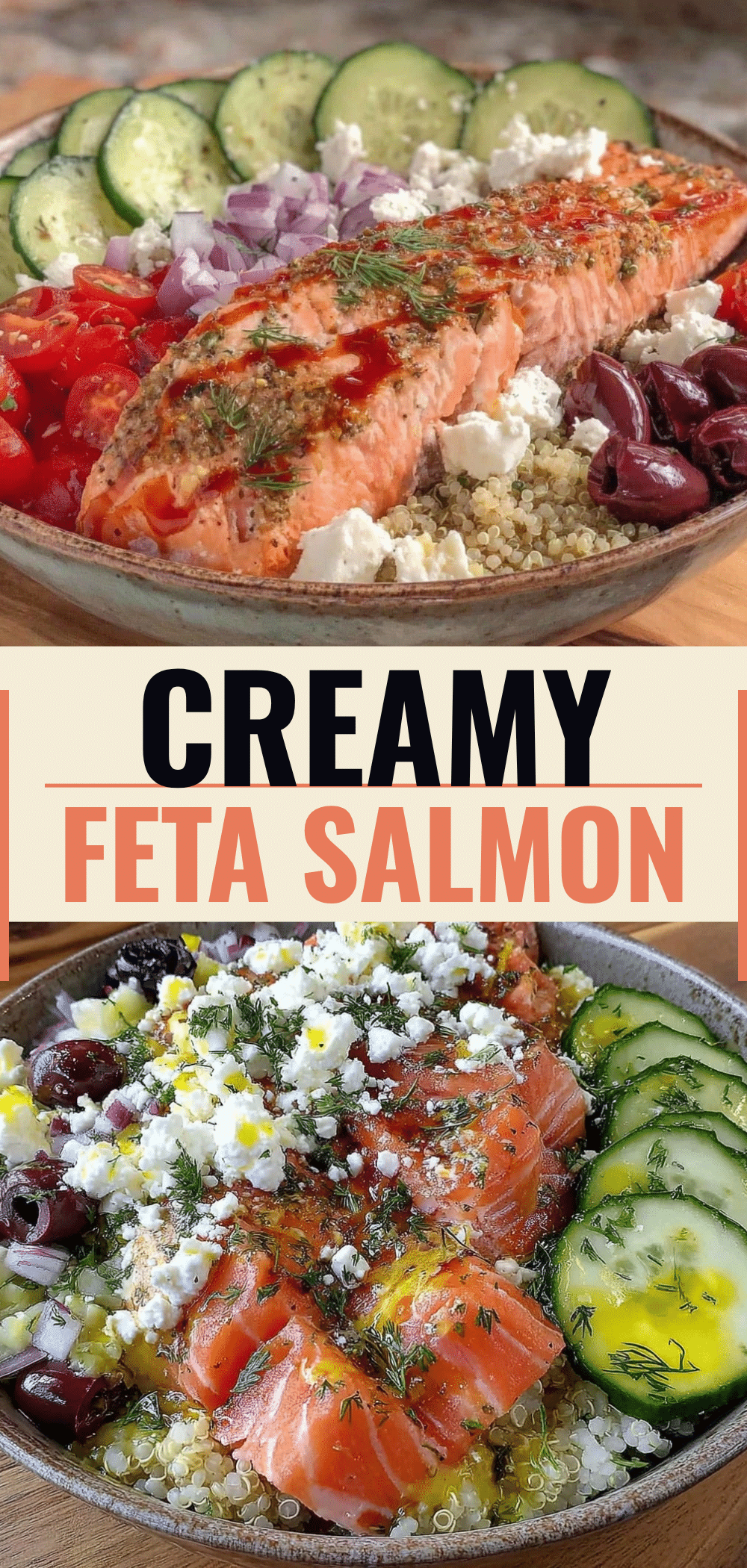
Mediterranean Salmon Bowl with Cucumber and Feta
- Total Time: 25 minutes
- Yield: 4 servings 1x
Description
A quick, healthy, and stress-free weeknight dinner that comes together in about 15-20 minutes. This bowl features baked salmon, fluffy quinoa or couscous, fresh vegetables, and a tangy lemon-herb dressing.
Ingredients
- 4 salmon fillets (about 6oz each)
- 2 tablespoons extra virgin olive oil (for salmon)
- 1 teaspoon garlic powder
- 1 teaspoon smoked paprika
- Salt and black pepper to taste
- 1 cup dry quinoa or couscous
- 1.5 cups chicken or vegetable broth
- 1 English cucumber, diced
- 1 cup cherry tomatoes, halved
- ½ cup feta cheese, crumbled
- ¼ cup Kalamata olives, sliced
- 3 tablespoons fresh lemon juice
- 3 tablespoons extra virgin olive oil (for dressing)
- 1 teaspoon dried oregano
- 1 teaspoon maple syrup or honey
- 1 clove garlic, minced
Instructions
- Preheat oven to 400°F (200°C). Rinse quinoa under cold water until water runs clear.
- In a saucepan, combine quinoa, broth, and a pinch of salt. Bring to a boil, reduce heat to low, cover, and simmer for 15 minutes. (If using couscous, pour boiling broth over it, cover, and let sit for 5 minutes). Fluff with a fork and set aside.
- Pat salmon fillets dry with paper towels. In a small bowl, mix 2 tablespoons olive oil, garlic powder, smoked paprika, salt, and pepper. Brush mixture generously over the top of each salmon fillet.
- Place salmon skin-side down on a parchment-lined baking sheet. Bake for 12-14 minutes until fish flakes easily with a fork and is opaque throughout.
- While salmon cooks, prep vegetables: dice cucumber, halve tomatoes, slice olives, and crumble feta.
- In a small bowl, whisk together 3 tablespoons lemon juice, 3 tablespoons olive oil, dried oregano, maple syrup, minced garlic, salt, and pepper until emulsified.
- Flake the cooked salmon into large chunks.
- Divide warm grains among four bowls. Top with flaked salmon, cucumber, tomatoes, olives, and feta.
- Drizzle lemon-herb dressing over the bowls and serve immediately.
Notes
Do not overcook the salmon; it continues to cook slightly after removal from the oven. Rinse quinoa to remove bitter saponin. For meal prep, store components separately to prevent sogginess. Do not freeze this dish as the texture of the salmon and cucumbers will suffer.
- Prep Time: 10 minutes
- Cook Time: 15 minutes
- Category: Main Course
- Cuisine: Mediterranean
Nutrition
- Serving Size: 1 bowl
- Calories: 450
- Sugar: 4
- Sodium: 600
- Fat: 20
- Saturated Fat: 5
- Carbohydrates: 35
- Fiber: 5
- Protein: 35
Keywords: salmon bowl, mediterranean diet, healthy dinner, quick meals, 5pm dinner, gluten-free options, high protein