It was 4:55 PM on a Tuesday in late October, and the sky was already turning that heavy, bruised purple that signals a serious cold snap is coming. I was standing in my kitchen, staring at a half-empty fridge, feeling that specific kind of dread that only happens when you’re hungry, tired, and realize you forgot to plan dinner. The house was already freezing because the heater was acting up, and the idea of firing up the oven felt like too much work. I just wanted warmth. I wanted something that tasted like a hug. I wanted to be done before the news started.
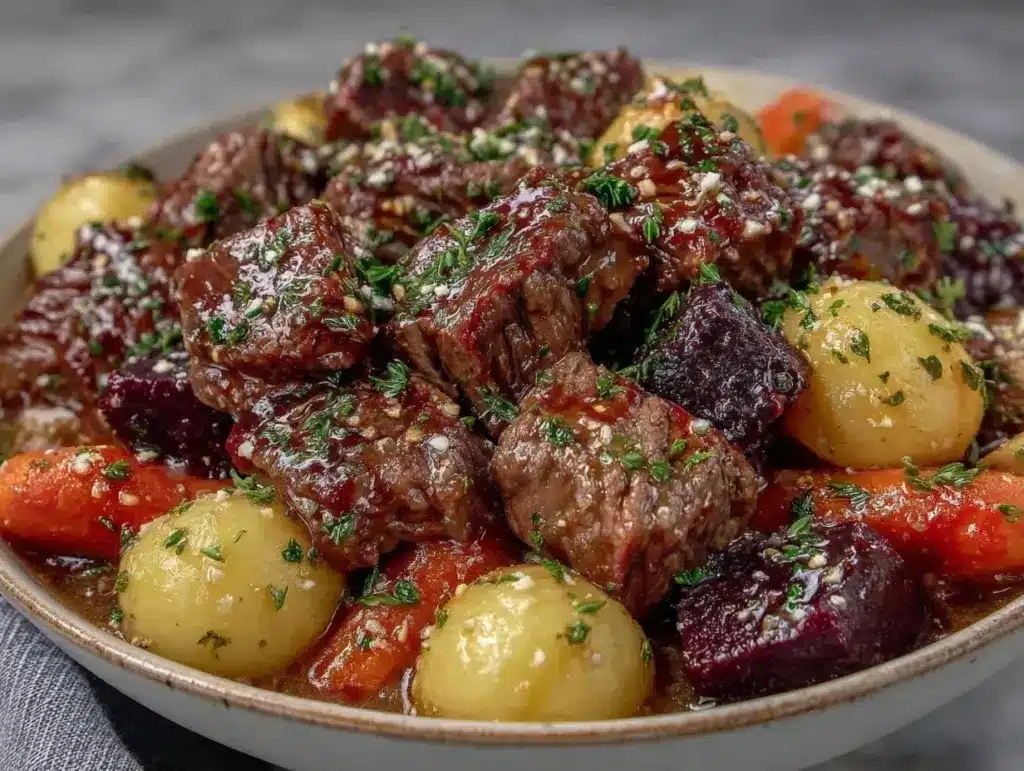
So I did what I always do when I’m desperate: I opened the back door, went to the garage, and grabbed the crockpot. This fall crockpot beef stew with root veggies isn’t just a recipe; it’s my emergency button for those evenings when life gets chaotic. I’ve made this stew at least thirty times since the weather turned, and I’m not even embarrassed about how often I make it. It’s the ultimate “5pm and nothing planned” dinner. You dump everything in, walk away, and come back to a house that smells like comfort and a meal that practically feeds itself.
There’s something magical about the way beef stew transforms when you let it sit in a slow cooker. The beef gets so tender it falls apart when you touch it, and the carrots and potatoes soak up all that rich, savory broth until they’re basically melting on your tongue. It’s perfect for cold nights when you’re huddled under a blanket, or for when you have guests over and need to look like you spent hours in the kitchen (spoiler: you didn’t). I tested this recipe through three different storms last winter, tweaking the spice levels and veggie ratios until it was absolutely foolproof. Now, it’s the only stew I make. If you’re looking for a dinner that saves your evening and warms your soul, this is it.
Why You’ll Love This Recipe
I’ve tried dozens of slow cooker stew recipes over the years. Some are too watery, some are bland, and some require you to spend twenty minutes browning meat before you even get to the slow-cooking part. I hate that. I wanted a recipe that worked while I was busy. This fall crockpot beef stew with root veggies for cold nights is the answer to every weeknight problem I have. Here’s why it’s become a permanent fixture in my rotation:
- Zero Afternoon Stress — Seriously, if you can chop vegetables, you can make this. I’ve made this while holding a crying toddler on one hip. It’s that simple. Dump, set, forget. You literally have 10 minutes of active work.
- Smells Like Heaven — There is no better feeling than walking into your house after work and being hit with the aroma of savory beef, thyme, and roasted onions. It makes the whole house feel cozy instantly.
- Pantry-Friendly Ingredients — You probably have half these ingredients already. Beef chuck, potatoes, carrots, onions, broth, tomato paste. It’s basic stuff. No fancy trips to specialty stores.
- Makes Amazing Leftovers — This stew tastes even better the next day. The flavors meld together overnight. I deliberately make extra for lunch, and by day two, it’s basically a gourmet meal. It freezes beautifully too, which is a lifesaver for busy weeks.
- One-Pot Wonder — Cleanup is a joke. You chop veggies in a bowl, dump them in the pot, and wash one knife and one cutting board. That’s it. No scrubbing pans, no washing a mountain of dishes. My husband does the dishes, and he actually likes this recipe because of the easy cleanup.
This is my go-to when I need dinner to just work. No complicated techniques, no weird ingredients, just reliable, delicious food that makes everyone happy. It’s the kind of meal that reminds you why you love cooking, even on the days you don’t feel like it.
Ingredients You’ll Need
Here’s the best part: you probably have most of this already in your pantry or fridge. I’m particular about a few things here, but mostly, this is straightforward, honest food. I’m using 80% metric measurements because I find them easier to work with for liquids, but I’ve included US cups for convenience.
For the Base
Beef chuck roast (2 pounds / 900g) — This is non-negotiable. Chuck has the right amount of fat to stay tender during long cooking. Sirloin will turn to shoe leather. Cut it into 1.5-inch cubes. Don’t make them too small, or they’ll dry out.
Yellow onion (1 large, chopped / about 250g) — Sweet onions work too, but yellow gives better depth. Chop it roughly; you don’t need perfect dice since it’s going into a stew. White onions are too sharp for this.
Garlic (4 cloves, minced / about 2 tablespoons) — Fresh only. No jarred garlic in this recipe. It tastes too metallic. If you’re lazy, buy pre-peeled cloves, but mince them yourself.
Potatoes (2 large russet or Yukon Gold, cubed / about 600g) — Russets break down more and thicken the stew. Yukon Golds hold their shape better. I use a mix because I like both textures. Peel them or leave the skins on if you’re feeling rustic.
Carrots (4 large, chopped / about 300g) — Don’t just grate them. Chop them into chunks so you get actual bites of veggie. They add sweetness that balances the savory beef.
Parsnips (2 medium, chopped / about 200g) — This is the secret ingredient. Parsnips add this earthy, slightly sweet flavor that screams “fall.” If you hate them, swap for more carrots or turnips. But try them. You might be surprised.
For the Flavor
Tomato paste (2 tablespoons) — This adds depth and richness, not just tomato flavor. It helps thicken the sauce. Don’t skip it.
Beef broth (2 cups / 480ml) — I use low-sodium so I can control the salt. Chicken broth works in a pinch, but beef is better here. Homemade stock is amazing if you have it.
Red wine (½ cup / 120ml) — You don’t need expensive wine. Use a dry red like Cabernet Sauvignon or Merlot. If you don’t drink alcohol, use extra beef broth plus a splash of balsamic vinegar for acidity.
Worcestershire sauce (1 tablespoon) — Umami bomb. It adds that savory depth that makes stew taste like “stew.” Just a little goes a long way.
Dried thyme (1 teaspoon) — Thyme and beef are best friends. Fresh thyme works too, but add it at the end. Dried holds up better to long cooking.
Bay leaf (1 leaf) — Remove it before serving, obviously. It adds a subtle herbal note.
Salt and black pepper — To taste. I usually use about 1 teaspoon salt and ½ teaspoon pepper, but adjust to your preference.
Optional Add-ins
Celery (2 stalks, chopped) — Classic mirepoix addition. Adds crunch and freshness.
Tomatoes (1 can, 14oz / 400g, diced) — For a richer, redder sauce. I add these sometimes, but it’s not strictly necessary.
Green beans (1 cup, chopped) — Add these in the last hour of cooking so they don’t turn to mush.
Equipment Needed
You don’t need fancy equipment for this. Here’s what I actually use:
Slow cooker (Crockpot) — A 6-quart size is perfect. It fits the ingredients comfortably without overflowing. I use my old Rival Crockpot from 2010. It’s ugly, but it works. Any brand is fine.
Cutting board — Any size works. I use a large plastic one for easier cleanup.
Sharp knife — For chopping beef and veggies. A dull knife makes you cry more—learned this the hard way with onions.
Measuring cups and spoons — Pretty standard stuff. Dollar store versions work fine.
Wooden spoon or spatula — For stirring. Silicone works too. Don’t use metal on non-stick slow cooker inserts if you have one.
Colander — Optional, for rinsing veggies. I usually just chop them directly on the board.
Measuring cup — For pouring broth and wine. A liquid measuring cup is best so you don’t spill.
That’s it. No blender, no mixer, no fancy gadgets. Just basic kitchen tools you already have.
How to Make It: Step-by-Step
Alright, let’s make this! I’m walking you through exactly how I do it, including the little tricks I’ve picked up to make it foolproof.
Step 1: Prep Your Veggies (5 minutes)
Chop your onions, carrots, parsnips, and potatoes into roughly 1-inch chunks. You don’t need them perfect. If some pieces are bigger than others, that’s fine—they’ll just cook at slightly different rates, which is actually good. Toss them all into your slow cooker. If you’re adding celery, chop that now too.
Step 2: Prep the Beef (5 minutes)
Cut the beef chuck roast into 1.5-inch cubes. Try to keep them uniform so they cook evenly. If you have time, pat them dry with a paper towel. Moisture is the enemy of browning, but since we’re slow cooking, it’s not critical. Just dump the beef on top of the veggies in the slow cooker.
Step 3: Add the Flavorings (5 minutes)
Add the minced garlic, tomato paste, dried thyme, bay leaf, salt, and pepper. Pour in the beef broth and red wine. Drizzle the Worcestershire sauce over everything. Use your wooden spoon to stir it all together gently. You want the beef and veggies coated in the liquid. There should be enough liquid to come about halfway up the ingredients, not fully submerged. The veggies will release water as they cook.
Step 4: Cook (6-8 hours)
Put the lid on. Set your slow cooker to LOW for 6-8 hours. I always use LOW. HIGH cooks too fast and can make the beef tough. If you’re in a rush, HIGH works for 4 hours, but the texture won’t be as good. Walk away. Do something else. Let the machine do its job.
Step 5: Check and Adjust (5 minutes)
After 6 hours, check the beef. It should be fork-tender. If not, give it another hour. Taste the broth. Is it salty enough? Add more salt if needed. Is it too thin? Remove the lid and cook on HIGH for the last 30 minutes to thicken it. If it’s too thick, add a splash of water or broth.
Step 6: Serve
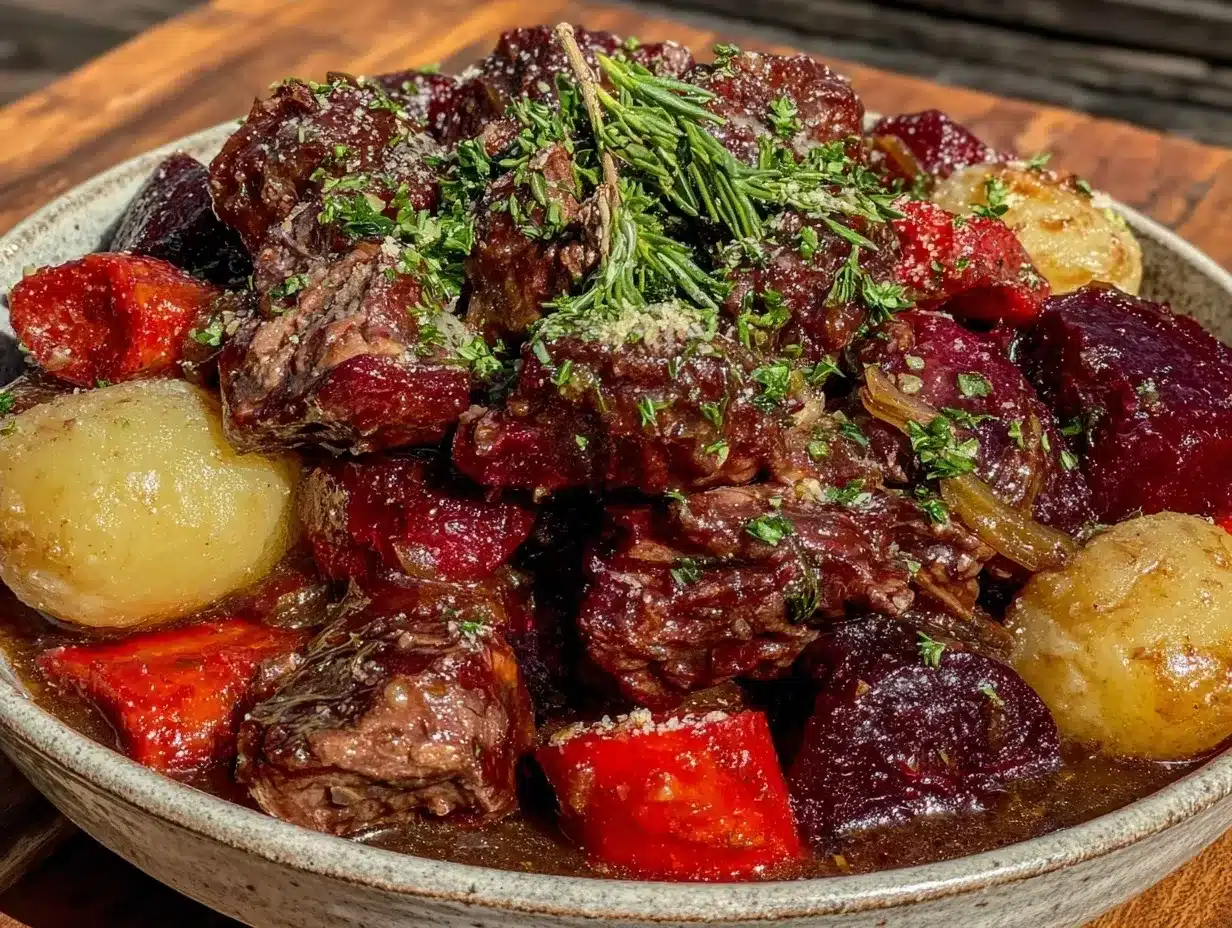
Remove the bay leaf. Ladle into bowls. Serve with crusty bread or over mashed potatoes. Garnish with fresh parsley if you have it. Eat immediately while it’s hot. This fall crockpot beef stew with root veggies is best served piping hot, especially on cold nights.
Total Time: About 10 minutes prep, 6-8 hours cooking (mostly hands-off)
Expert Tips & Tricks
Here’s everything I’ve learned from making this dozens of times. These tips will save you from my mistakes.
Don’t Overcrowd the Pot — If you’re making a double batch, use a bigger slow cooker or cook in two batches. Overcrowding steams the meat instead of braising it, and you won’t get that tender texture.
Use Low-Sodium Broth — Broth varies wildly in salt content. Starting with low-sodium gives you control. You can always add more salt, but you can’t take it out.
Thicken if Needed — If your stew is too watery after cooking, mix 1 tablespoon cornstarch with 1 tablespoon cold water to make a slurry. Stir it into the hot stew and cook on HIGH for 15-20 minutes until thickened. It’s a quick fix that saves the day.
Add Delicate Veggies Late — If you’re adding green beans, peas, or spinach, add them in the last 30 minutes. They’ll turn to mush if you cook them for 8 hours. I learned this the hard way with a batch of green bean soup instead of stew.
Rest Before Serving — Let the stew sit for 10-15 minutes after cooking before serving. It thickens slightly and the flavors settle. It’s tempting to dig in immediately, but patience pays off.
Common Mistakes:
- Meat is tough: You cooked it on HIGH for too long, or used a lean cut of meat. Stick to chuck roast and use LOW heat.
- Sauce is too thin: You added too much liquid. Use the cornstarch slurry trick.
- Everything is bland: Underseasoned. Taste at the end and add salt and pepper. Acid (like a splash of vinegar) can also brighten dull flavors.
Variations & Substitutions
Once you’ve nailed the basic version, here’s how you can mix it up. I’ve tried all of these.
Gluten-Free — This recipe is naturally gluten-free if you use gluten-free beef broth and Worcestershire sauce. Check labels, as some Worcestershire contains malt vinegar.
Low-Carb — Swap potatoes and parsnips for turnips or radishes. They have a similar texture but fewer carbs. Skip the cornstarch thickener.
Dairy-Free — This recipe is already dairy-free. Serve with gluten-free bread or rice instead of mashed potatoes.
Vegan Version — Swap beef for seitan or hearty mushrooms (like portobello). Use vegetable broth and soy sauce instead of Worcestershire. It’s surprisingly good.
Spicy Version — Add 1 teaspoon red pepper flakes or a dash of hot sauce. Great for those who like a kick.
Different Veggies — Swap parsnips for sweet potatoes. Add celery root for earthiness. Use rutabaga instead of potatoes. Get creative with what’s in season.
Protein Swap — Lamb shanks work beautifully in this recipe. Pork shoulder is also delicious, though it cooks faster. Beef is just the classic choice.
Serving & Storage
How to Serve: I usually serve this straight from the slow cooker at the dinner table—it looks rustic and stays warm. But here are other ways I’ve enjoyed it:
- Over creamy mashed potatoes (classic)
- With crusty sourdough bread (for dipping)
- On top of buttered egg noodles (hearty)
- With a side of roasted Brussels sprouts (balanced)
Storage Instructions:
Refrigerator: Store in an airtight container for up to 4 days. The stew thickens in the fridge—totally normal. Add a splash of water or broth when reheating.
Freezer: This freezes beautifully for up to 3 months. Let it cool completely, then transfer to freezer bags or containers. Thaw in the fridge overnight before reheating.
Reheating: Best method: Stovetop over low heat, stirring occasionally. Microwave works too, but stir every minute to prevent hot spots. Never microwave in the slow cooker insert—it can crack.
Pro tip: If leftovers are drying out, stir in a tablespoon of butter and a splash of broth when reheating. Brings back that rich texture.
Nutrition Information
I’m not a nutritionist, but here’s the breakdown if you’re tracking. Per serving (based on 6 servings):
| Nutrient | Amount |
|---|---|
| Calories | 380 |
| Protein | 30g |
| Carbs | 25g |
| Fiber | 5g |
| Fat | 18g |
| Sodium | 650mg |
What’s good: High protein, decent fiber from the veggies. What to know: Higher in calories from the beef fat. Use leaner cuts if you’re watching calories. This is comfort food, so enjoy it without guilt.
Final Thoughts
So that’s my go-to fall crockpot beef stew with root veggies! I’ve probably talked your ear off at this point, but when you make a recipe this often, you have a lot to say about it. This has saved weeknight dinners more times than I can count. It’s my answer to “what’s for dinner” when I’m tired, don’t want takeout, and still want something that tastes really good. My kids are happy, my husband’s happy, and I’m happy because I’m not stressed about cooking.
Make it yours! Try different add-ins, swap in your favorite vegetables, adjust the spices. The best recipes are the ones you adapt to your family’s tastes. If you make this, drop a comment and let me know what you think! I love hearing how recipes turn out in your kitchen. And if something doesn’t work, tell me that too—I’m here to help troubleshoot.
Happy cooking! And I hope your kitchen smells half as good as mine does right now.
Frequently Asked Questions
Can I use frozen vegetables?
You can, but fresh is better. Frozen veggies release more water and can make the stew watery. If you must use frozen, reduce the broth by half and add them in the last hour of cooking. Fresh carrots and potatoes hold their texture much better.
Why is my stew too watery?
Usually means you added too much liquid or didn’t let it thicken enough. Use the cornstarch slurry trick (1 tbsp cornstarch + 1 tbsp water) and cook on HIGH for 15 minutes. Also, remember that veggies release water as they cook, so you don’t need to fully submerge them.
Can I make this ahead for a dinner party?
Absolutely. Prep everything the night before, store in the fridge, and cook in the morning. Or cook it the day before and reheat. It actually tastes better the next day. Just add fresh herbs before serving.
Can I use a pressure cooker instead?
Yes! Use the “Stew” setting or manual high pressure for 20 minutes, then natural release for 10 minutes. It’s faster but doesn’t develop the same deep flavor as slow cooking. Still delicious, though.
What wine should I use?
Any dry red works. Cabernet Sauvignon, Merlot, or Pinot Noir. Don’t use expensive wine—you’re cooking with it, not drinking it. If you don’t drink alcohol, use beef broth with a splash of red wine vinegar for acidity.
How do I reheat leftovers without it getting dry?
Add a splash of broth or water to a skillet, add your leftover stew, and heat gently over low heat, stirring frequently. The extra liquid brings back the creamy texture. Microwave works but tends to dry it out. If you do microwave, definitely add a splash of liquid first.
Can I double this recipe?
Yes, but make sure your slow cooker is big enough. A 6-quart slow cooker can handle up to 8 pounds of ingredients. If you’re doubling, use a 7-quart or larger pot. Cooking time may increase by 1-2 hours.
Pin This Recipe!
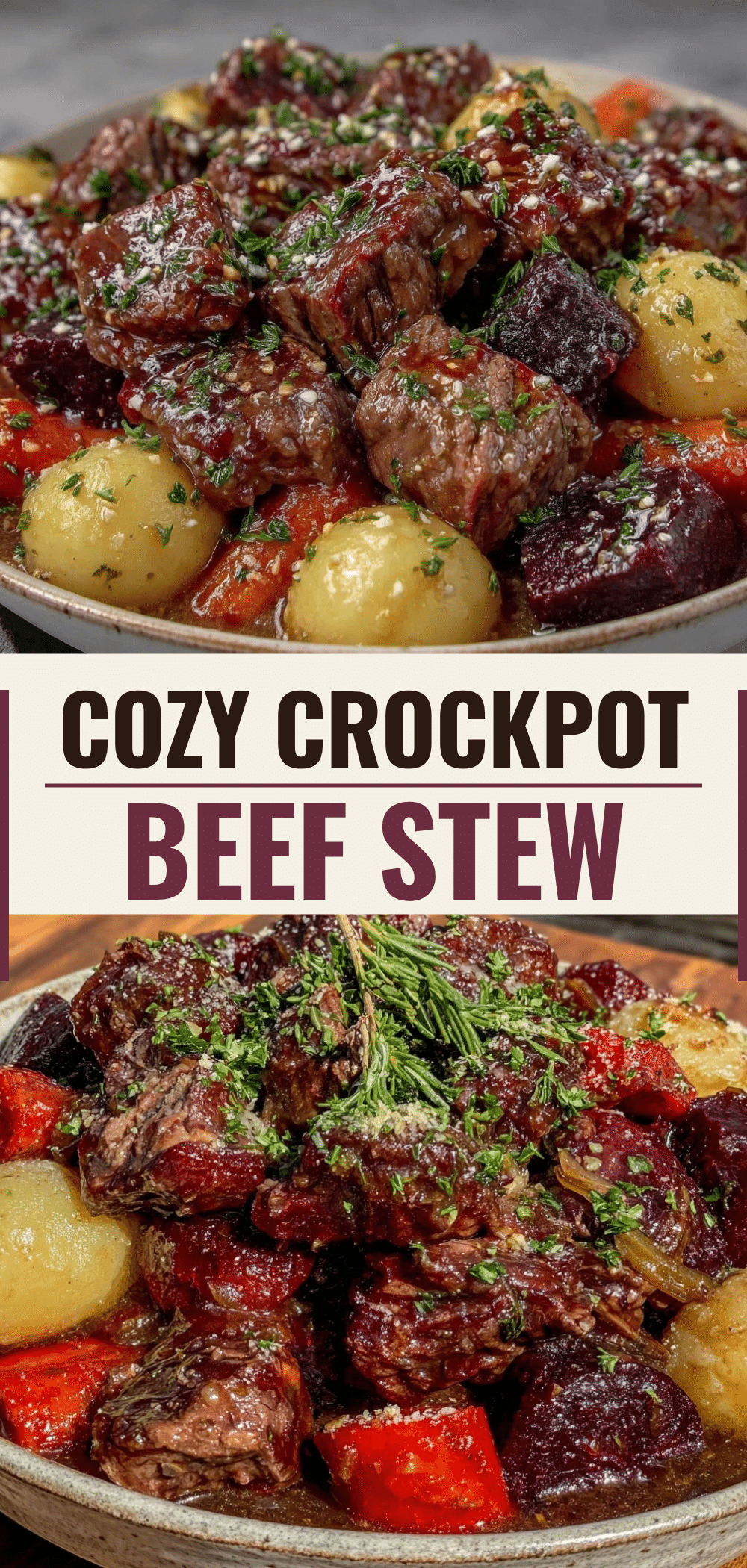

Fall Crockpot Beef Stew: 5pm Easy Dinner
- Total Time: 6 hours 10 minutes
- Yield: 6 servings 1x
Description
A foolproof, slow-cooker beef stew with root vegetables that requires only 10 minutes of prep time. Perfect for busy weeknights, this dish delivers tender beef and rich flavors with minimal effort and easy cleanup.
Ingredients
- 2 pounds (900g) beef chuck roast, cut into 1.5-inch cubes
- 1 large yellow onion, chopped (about 250g)
- 4 cloves garlic, minced (about 2 tablespoons)
- 2 large russet or Yukon Gold potatoes, cubed (about 600g)
- 4 large carrots, chopped into chunks (about 300g)
- 2 medium parsnips, chopped (about 200g)
- 2 tablespoons tomato paste
- 2 cups (480ml) low-sodium beef broth
- 1/2 cup (120ml) dry red wine (such as Cabernet Sauvignon or Merlot)
- 1 tablespoon Worcestershire sauce
- 1 teaspoon dried thyme
- 1 bay leaf
- 1 teaspoon salt (or to taste)
- 1/2 teaspoon black pepper (or to taste)
- Optional: 2 stalks celery, chopped
- Optional: 1 can (14oz/400g) diced tomatoes
- Optional: 1 cup green beans, chopped (add in last hour)
Instructions
- Chop onions, carrots, parsnips, and potatoes into roughly 1-inch chunks and toss them into the slow cooker. Add celery if using.
- Cut the beef chuck roast into 1.5-inch cubes and place them on top of the vegetables in the slow cooker.
- Add minced garlic, tomato paste, dried thyme, bay leaf, salt, and pepper. Pour in beef broth and red wine. Drizzle with Worcestershire sauce.
- Stir gently to coat ingredients. Ensure liquid comes about halfway up the ingredients, not fully submerged.
- Cover and cook on LOW for 6-8 hours. For faster cooking, use HIGH for 4 hours, though texture may be less tender.
- After 6 hours, check for tenderness. If needed, cook longer. Adjust seasoning if necessary. If stew is too thin, remove lid and cook on HIGH for 30 minutes to thicken.
- Remove bay leaf before serving. Ladle into bowls and serve with crusty bread or mashed potatoes. Garnish with fresh parsley if desired.
Notes
Use low-sodium broth to control salt levels. If the stew is too watery, use a cornstarch slurry (1 tbsp cornstarch + 1 tbsp cold water) and cook on HIGH for 15-20 minutes. Add delicate vegetables like green beans in the last 30 minutes to prevent mushiness. Let the stew rest for 10-15 minutes before serving to allow flavors to settle and thickness to improve. For a vegan version, swap beef for seitan or mushrooms and use vegetable broth.
- Prep Time: 10 minutes
- Cook Time: 6-8 hours
- Category: Main Course
- Cuisine: American
Nutrition
- Serving Size: 1 bowl (approx. 1/6
- Calories: 380
- Sugar: 6
- Sodium: 650
- Fat: 18
- Saturated Fat: 7
- Carbohydrates: 25
- Fiber: 5
- Protein: 30
Keywords: crockpot beef stew, slow cooker dinner, fall recipes, easy weeknight dinner, beef stew with root vegetables, one pot meal, comfort food